

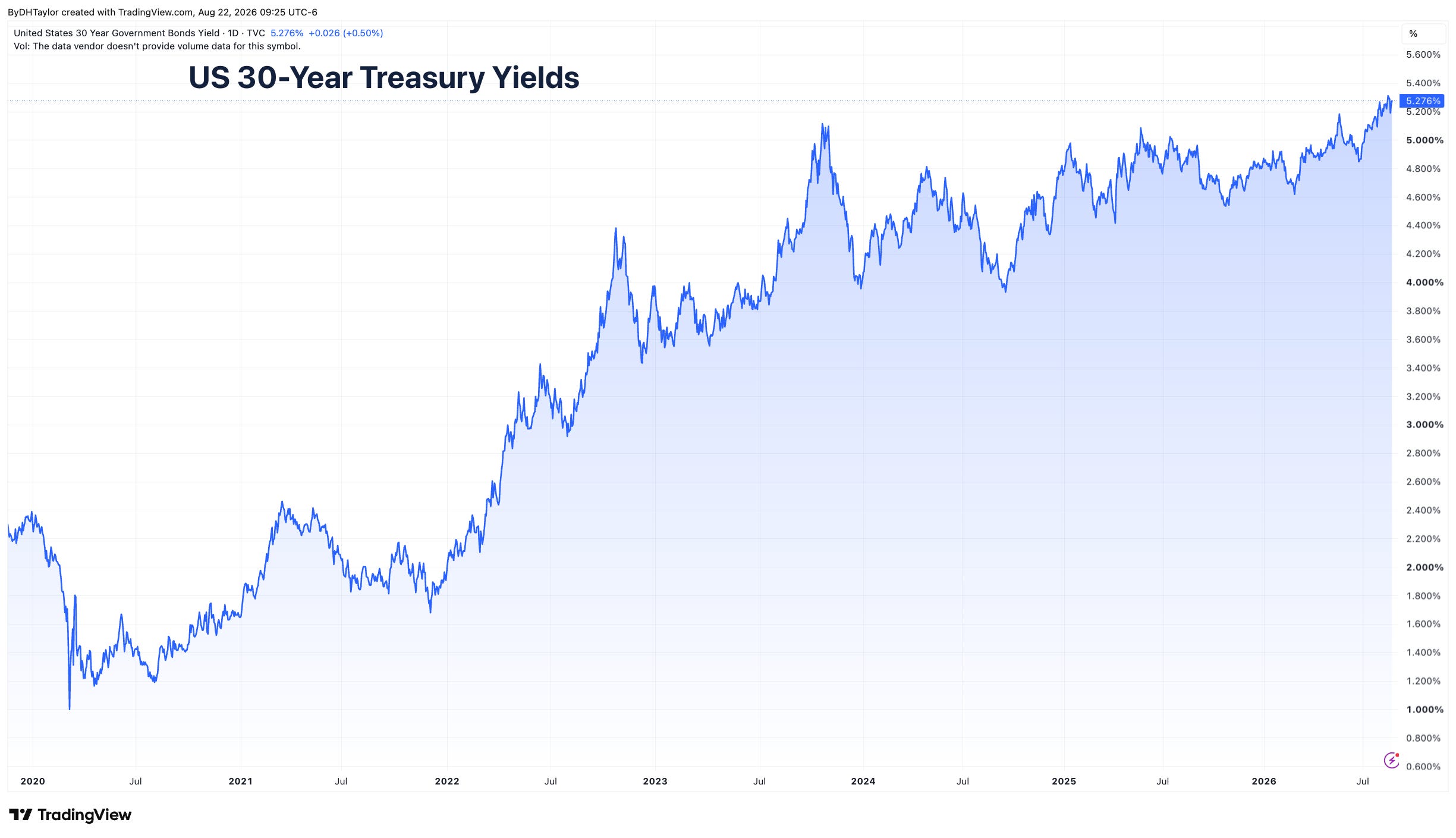
The Bank of Japan has been lowering its purchases of Japanese Government Bonds (JGBs) and this has driven global interest rates higher
Inflation, US government debt, and AI hyper-scaler debt issuances have simultaneously driven interest rates higher
So what?
Long-end interest rates will continue higher as far more supply hits the markets with less buyers

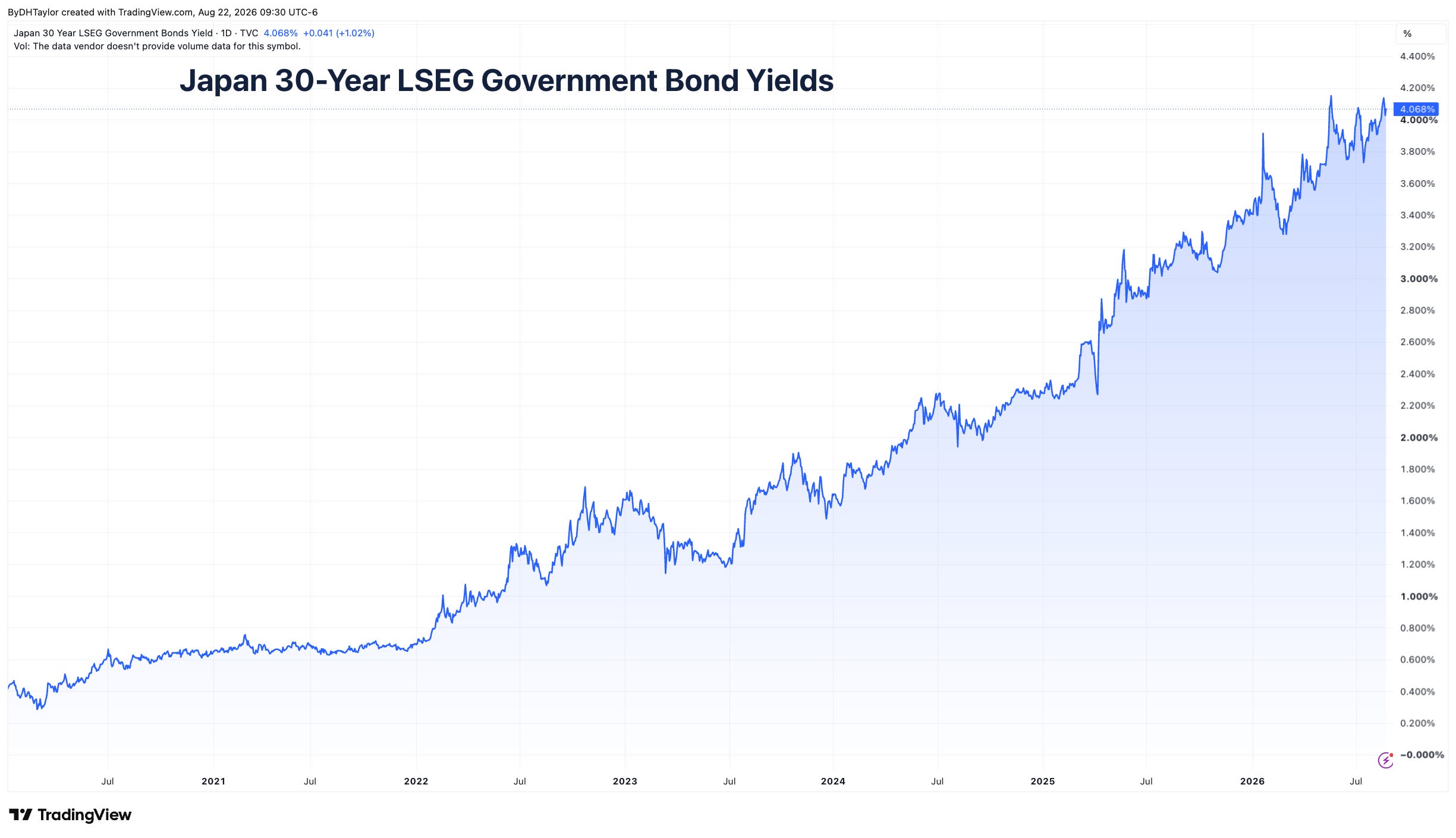
The bond market became unhinged this week, so much so that the Treasury Dept. is being forced to step in and provide additional liquidity to the market with purchasing of long-dated bonds.
If you are just looking at the United States, you’d miss a lot of the cause of the move versus just the effect of why things are amiss. As it turns out, the world is far more global than many realize, and the chart above is an excellent place to begin analysis.
The chart above is the yield on the 30-year Japanese Government Bond (JGB). Like every other country in the world, in 2022, after COVID, there was inflation. All interest rates around the world went higher as world reserve banks set off to cap price increases.
Unlike all other countries, however, while the rest of the world stopped increasing interest rates, policies were different in Japan. Specifically, the Bank of Japan began lowering the amount of government bonds they were purchasing, which has had the effect of pushing up interest rates in Japan.
Quantitative Easing
The Bank of Japan has been trying to prop up the Japanese economy with a massive program of Quantitative Easing (QE), to the tune of several trillion yen of purchases per month. The process involves the Bank of Japan buying Japanese debt using its printing press for the cash, ultimately supporting the debt load that Japan has been taking on.
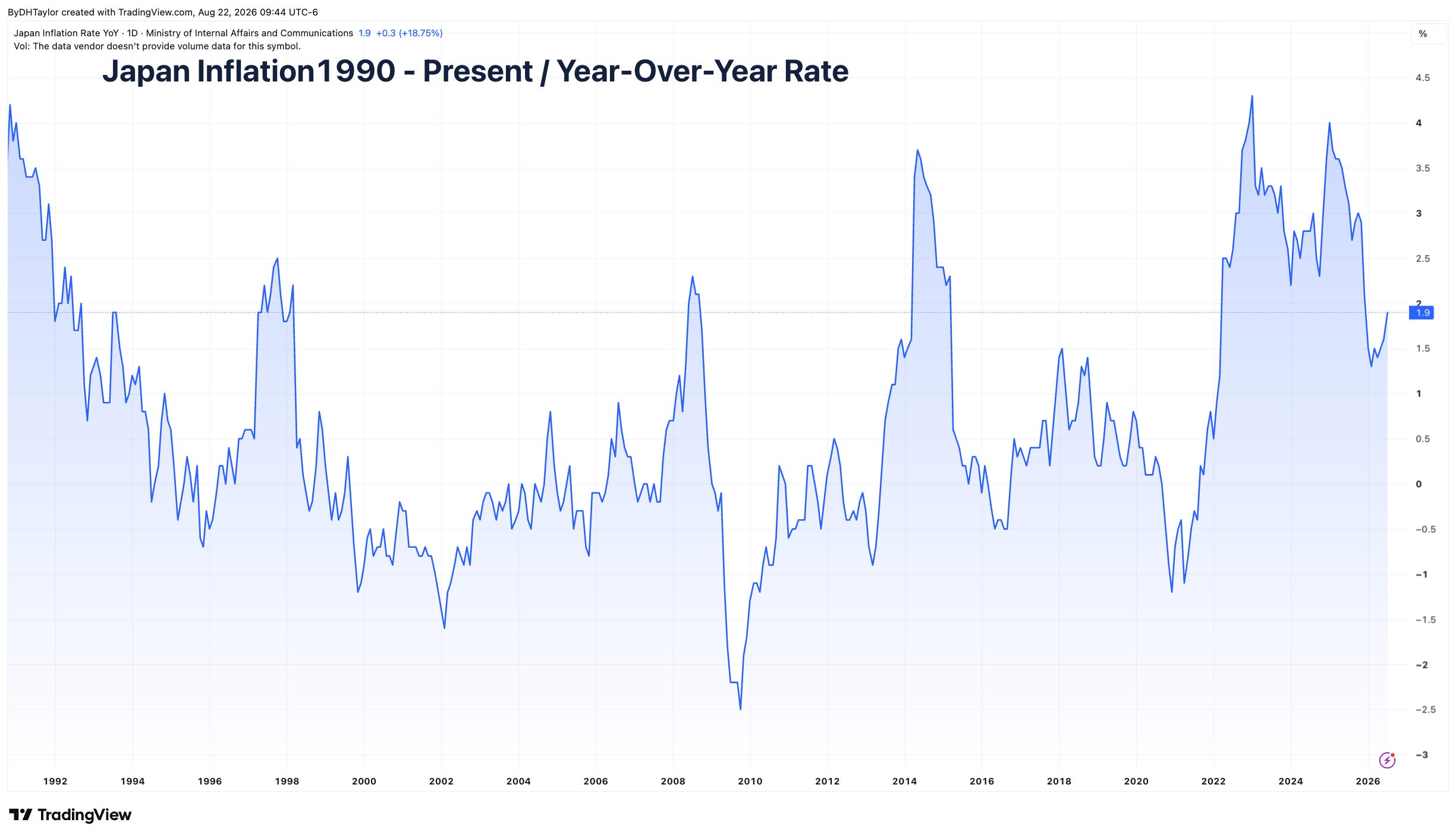
The idea is simple in that the Bank of Japan would drive interest rates downward, and borrowers would line up to use inexpensive financing to reinvigorate the Japanese economy. That didn’t work, really, as annual growth rates for Japan has mostly stayed close to 1.25% for several decades whereas inflation rates have mostly remained near zero.
The BoJ had hoped that by supporting the countries bond markets, this would create inflation. The program has not necessarily created the growth the country has desired.
In the meantime, there are externalities that have trickled throughout the world, and the United States has certainly seen its share of effects from this.
Japanese savers and pension funds have been sending money overseas to get better returns where other economies have been fairing very well. In fact, investors have effectively become interest rate arbitragers where they would borrow inexpensive yen and deposit those yen into US dollar-denominated interest-rate bearing instruments and earning a spread differential. Remember, the Bank of Japan had hoped they would be invigorating their own economy, but instead funds left the country chasing higher yield premium.
This begs to question why the Bank of Japan has done this policy for some three decades when the results were not being achieved.
In the meantime, one of the externalities of this policy is that the Japanese government was able to borrow money with nearly zero cost as the Bank of Japan was mopping up the government debt at near zero interest rates.
Time to Pay The Price
The Bank of Japan has announced that they are lowering the monthly purchases of Japanese government debt, and this is having the effect of true price discovery. The Bank of Japan had kept bond yields artificially low in Japan. Other countries have benefited from this as funds that normally would have purchased Japanese government debt instead trickled throughout the world supporting other debt markets such as the United States and Europe.
Now, the Bank of Japan is lowering its purchases… massively.
Initially, the Bank of Japan had been purchasing nearly ¥6T to what will now be about ¥2T per month (From about $36B USD down to about $12B USD). The bank has been lowering the purchases for a few years now, and this is coinciding with the moves higher in the 30-year Japanese government bond interest rates rising, as you can see in the chart at the beginning of this post.
Without the Bank of Japan artificially pushing price up, inverting bond yields lower, true price discovery is occurring in the Japanese bond markets. This is driving bond yields higher in Japan, and the spillover effects are also showing up in the United States.
While some Japanese savers may be shifting purchases of debt domestically, mostly any purchases abroad will remain—I do not see a selloff in US debt simply because Japanese debt is now higher… so far.
There are other reasons for the US bond yields to move higher, of course, and those same reasons would affect the Japanese markets as well: Inflation is one of the biggest reasons, as well as overall debt issuance in general.
The bottom line is that there is a lot of debt from governments, and only so many customers. Given that, and considering the amount of debt being issued, lenders can demand higher interest rates especially considering the fact that there are reasons to believe that inflation will drive interest rates higher. More on that below.

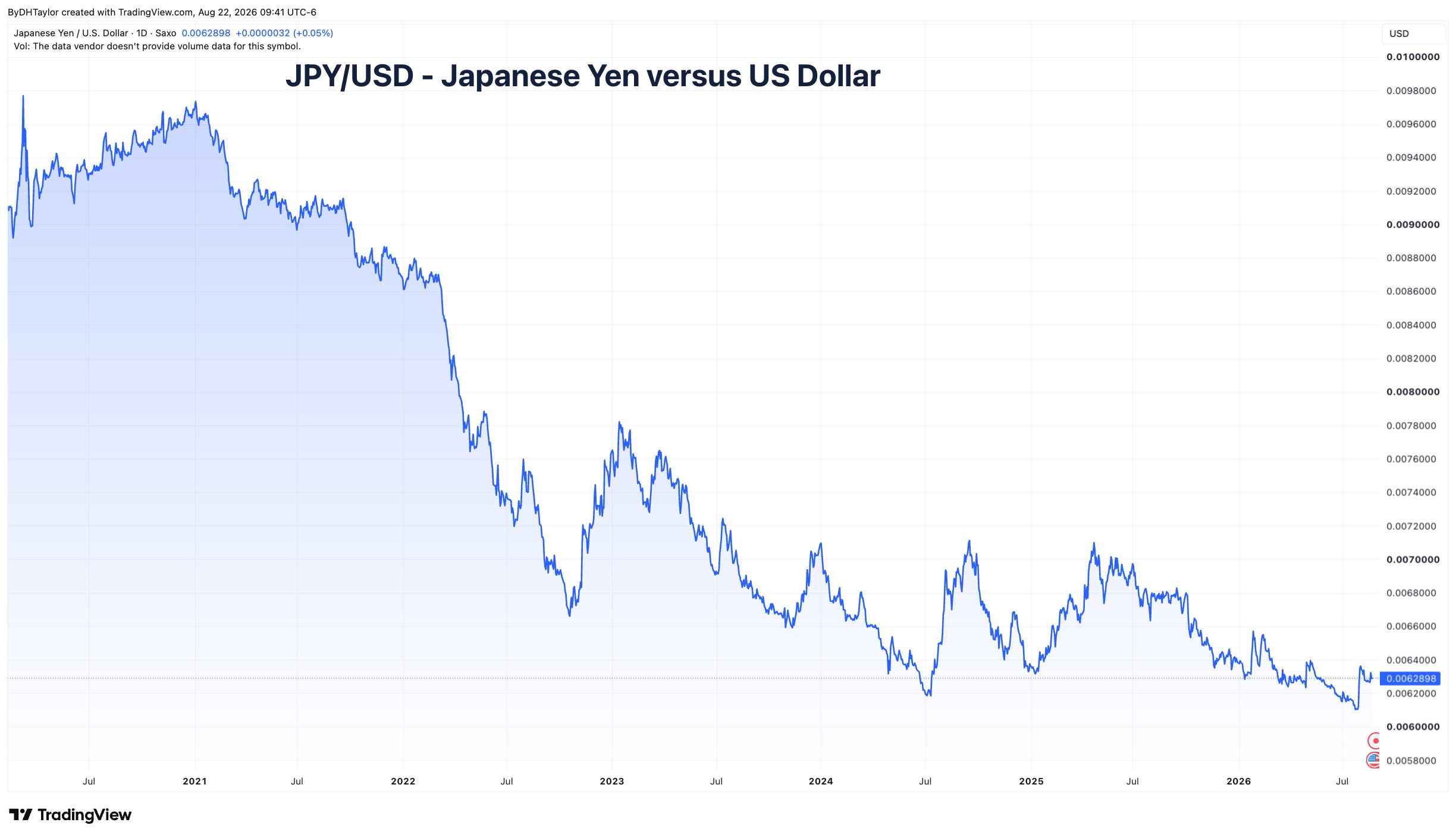
As it turns out, the Japanese yen is selling off to the point where for the first time in decades, both the United States and Japan have stepped into the FX market to stem the slide in the yen. There is still a big differential between the United States and Japan for interest rates where the US 10-Year Treasury is yielding 4.736% versus Japan at 2.884%; a difference of 1.852% at the time of this writing. Unless that differential narrows significantly, the Japanese yen will likely continue lower.
What is important to understand is that because the BoJ is no longer buying as much government debt, there may be a significant increase in inflation as the printing press will have created a massive devaluation of the purchasing power of yen. That, itself, will likely push the yen lower further. How this plays out may unhinge more than just the US bond market, and this is something that should be watched closely over the following few months and years.

S&P 500 Market
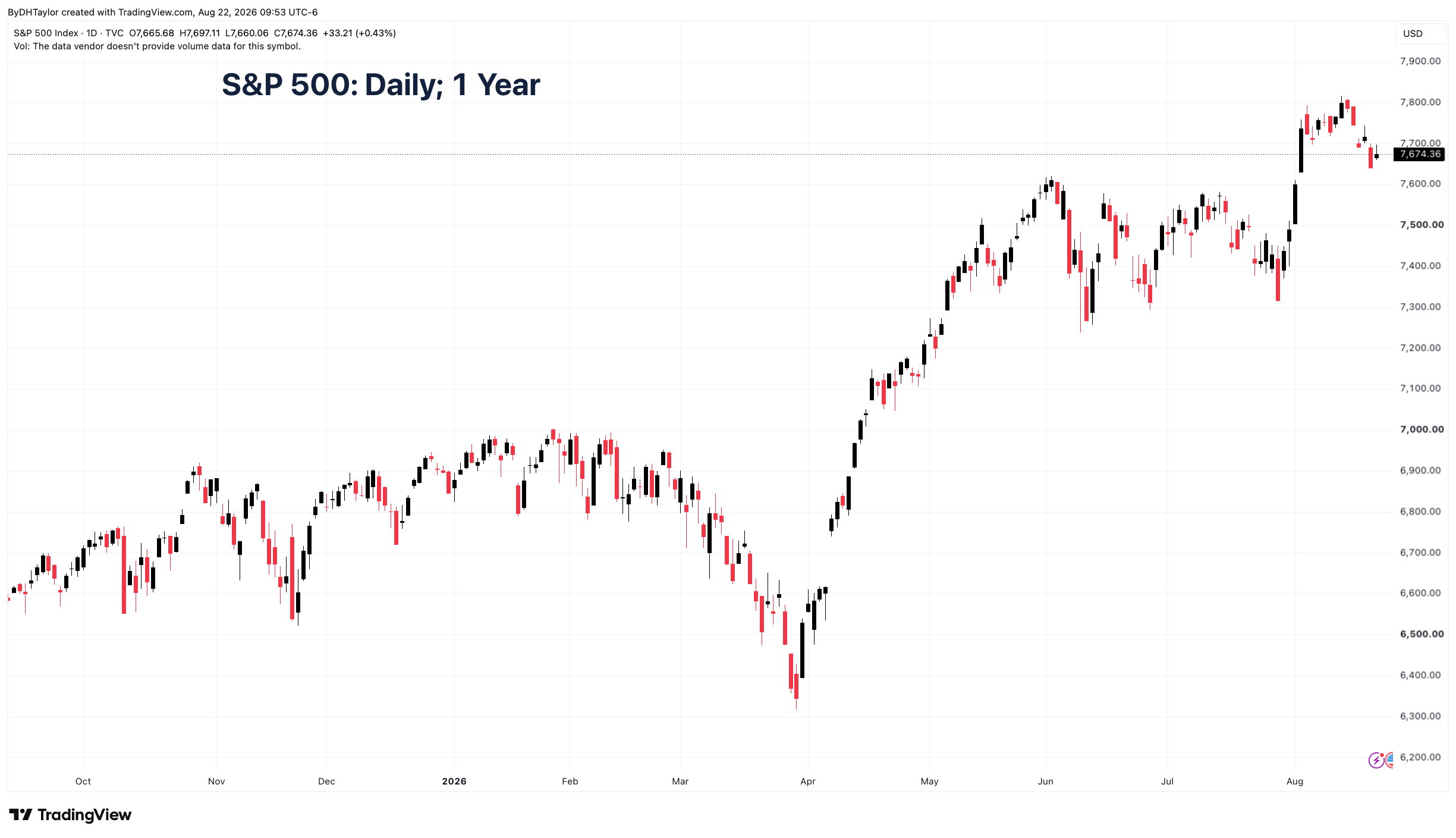
My positions remain the same in that I have been shorting the stock market as well as the bond market, and have done well over the year with this. I now believe that since the bond market is behaving as it is, there will be a global repricing of stocks as higher interest rates permeate through the world financial systems.
Here’s why:
Growth Rates
If interest rates move higher, growth would have to move higher to keep current valuations. However, companies do not operate in a vacuum. If there are higher interest rates, that means consumers are going to have to pay higher for borrowing costs, which accompanied by higher costs for goods due to tariffs, higher fuel costs because of the war with Iran, and overall cost increases from inflation.
Consumers account for some 70% of revenue generated by firms. If consumers are stretched because of the factors above, adding in even higher borrowing costs will tighten wallets even more. As it is, savings rates are at their historical lows and credit card debt is at all-time highs, which is how consumers are getting by. If borrowing costs increase on already-high credit cards, this means less disposable income for company revenue generation.
In order to sustain the current valuations of companies, growth rates will have to increase—where does that spurt of revenue growth come from?
Valuations
If you break down all of the S&P 500 stocks using a DCF, the increase in interest rates would need to be input into the models, The higher long-term interest rates would bring down valuations because of the need for higher growth rates due to the higher interest rates.
If analysis was completed using a 10-year yield as the comparison, and that yield is now up some 50 basis points higher, valuations would need to move downward in response; or there needs to be more growth in company revenues. That being said, the latest earnings season has been strong.
TLT ETF
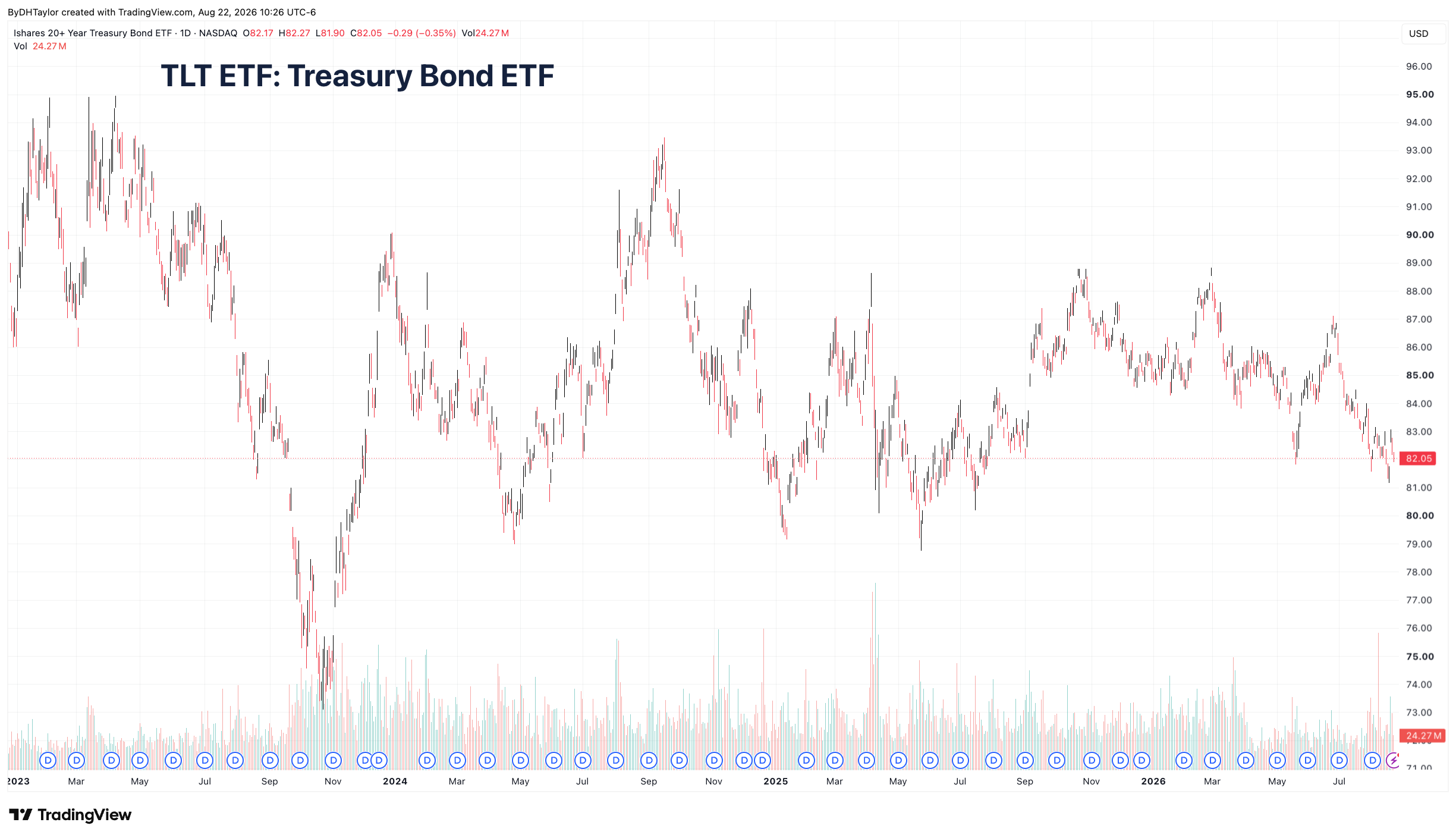
I have been shorting TLT ETF for a while now, as anyone following me would know. Because of the most recent developments, I am now eyeing up a test of the lows seen in late 2023 from where TLT is now. Looking at the charts above, I can see bond yields on the 30 pushing towards 5.50% - 5.75%, which is actually far more historically average. This should push TLT ETF downward below the latest lows; I am targeting between $70.00 - $75.00 on TLT ETF.
This is something that will be constantly in development. With inflation, oil prices, tariffs, US government debt, AI hyper-scalers, and Japan’s own bond yields rising, I do not see anything done by the Treasury ending bond yields rising any time soon.
