
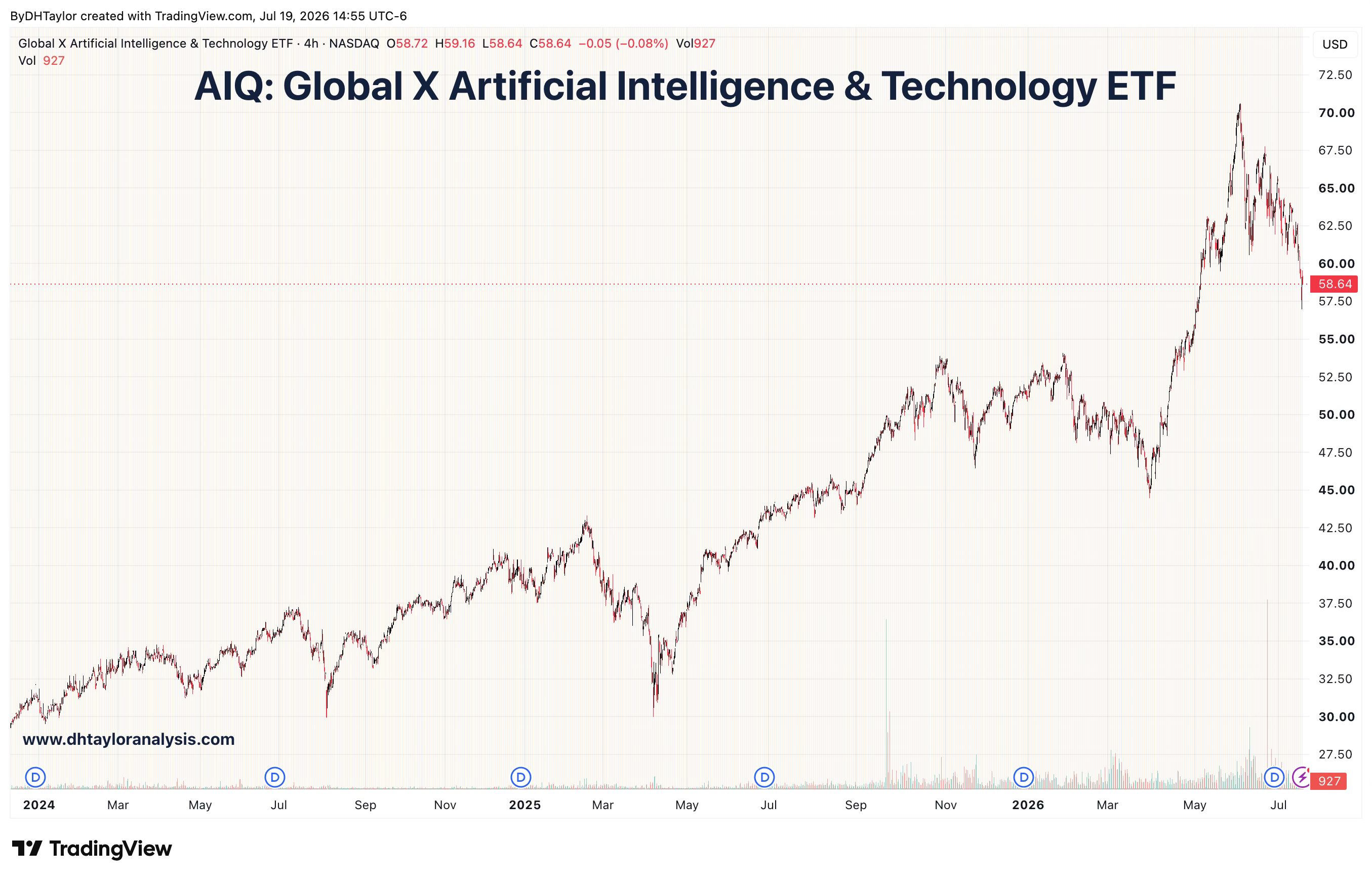
On Friday, the AI trade got a gut-check, and AI stocks sold off sharply. Moonshot released its latest Kimi K3 which is outperforming US AI, and doing so at a lower cost.
The announcement from Moonshot of their Kimi K3 performance and cost basis grabbed AI stock investors’ attention—the chart above is the AI ETF. For many reasons, investors—including me—have questioned the valuations for these AI stocks.
Chinese AI players are releasing better AI platforms that are lower cost than US versions. On the one hand, lower costs will translate to higher adoption rates. On the other hand, price competition will draw scrutiny from investors if US players cannot maintain ultra-rich margins.
AI stocks have been profitable, and for now adoption itself is not a bearish concern. Instead, it now narrows down to margins: If US companies purchase less expensive AI platform services that perform better, where does this leave US AI stocks?
Keep in mind two key events that may play into this:
Google parent Alphabet sold some $80B in stock to raise capital for additional AI buildout, and may have sold at the very top
Meta is now leasing out its spare capacity, which this calls into question the enormity of their buildout and what has been spent
These events above tell me that one company that would be looking at its own internal metrics is saying that their own stock is overvalued and opting to sell into that, while another company is saying that although they’ve initially promised to use all of its capacity internally, they are leasing out spare capacity—what do you mean spare capacity? Did Meta overbuild?
The AI trade is very circularly built where only a few players are buying products from each other, lending to each other to buy the products, and ultimately valuations may be built on stilts.
The question to ask is not if there will be demand for AI, or if hyperscalers will continue to spend, but if AI companies will still provide attractive returns. This should already be in question as Chinese platforms are performing better and at lower costs.
Let’s see where this goes for the AI trade this week, including how much companies are spending on AI products.
Financial Reports This Week
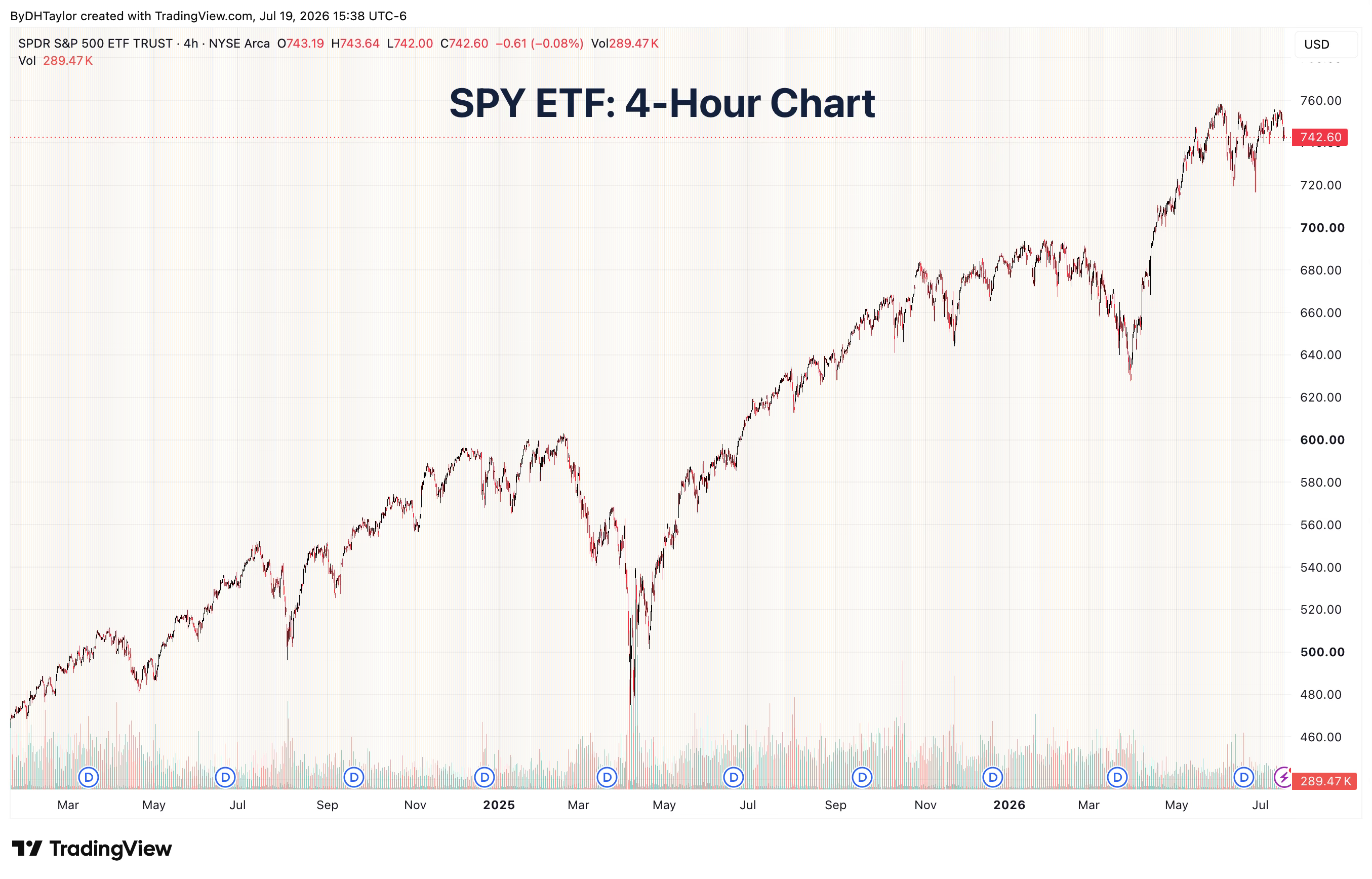
The US stock market was pressured lower on Friday with SPY ETF shedding 1.00%. This week, we get key financial releases from big names such as Alphabet on Wednesday where the real question gets asked if their AI spend is creating internal profits and an increasing CapEx is justified—they sold $80B in stock, so that could be an interesting question to answer.
Investors will be looking for a clear picture from companies as to improving monetization, performance, cloud usage, or enterprise demand. If we see wavering from key players in these areas of business, that a could reiterate that US AI companies are seeing a deterioration in competitiveness. That, in turn, will very likely ignite more profit taking and selling in key AI stocks.
Valuations for AI stocks will continually come into question. My view on this is that it is too early for some companies to reverse course right now. This may translate into some buying on the dip attempts. Ultimately, I think there has been tremendous overbuild, and competition is going to put a spotlight on that.
And then there is the never-ending conflict with Iran.
Oil Prices & Economics
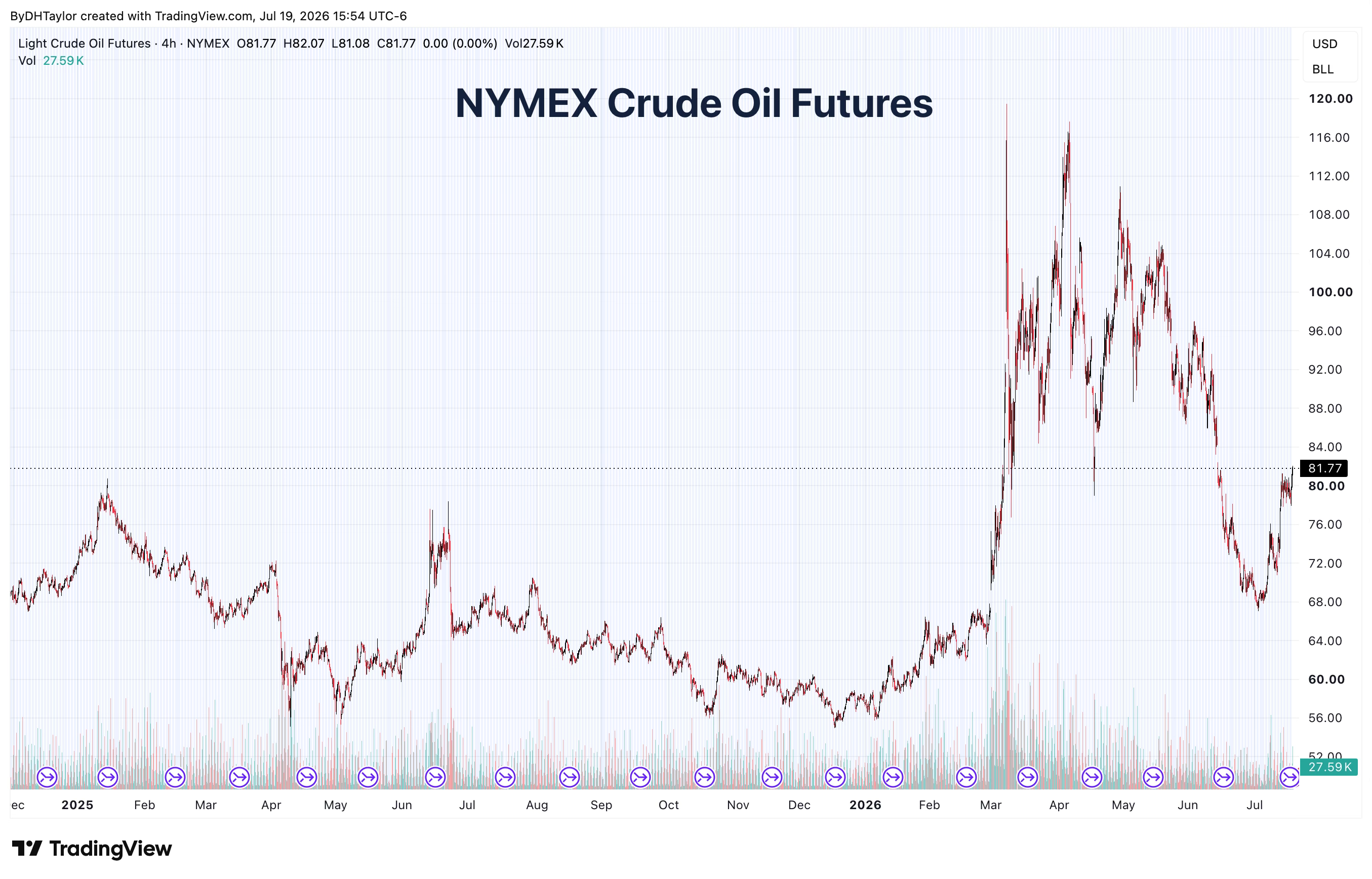
The US and Iran are trading missile attacks against each other again—will it ever end? I am writing this post early Sunday, and I expect this chart to be immediately obsolete once the market opens again—the price of oil will move up even more considering the numerous attacks over the weekend.
My Take
It is a bit too early for absolute proof that the AI trade is over. I do not believe that companies will all of a sudden reverse course. I do believe that valuations are going to be called into question, and I believe that although some firms will report excellent earnings, that will fall short of the ultra-high expectations for the stock market.
Mostly, I see the very top in the market in place—I am leaning into that.
I have been selling short-dated, 1-week, vertical call spreads heavily, and they have been expiring out of the money. I have then purchased longer-dated SPY ETF put spreads with the expectation that eventually there will be capitulation in the AI trade. The market has given some hints as to what is next. I think this all comes tumbling down, and I have every intention of taking advantage of that opportunity.
The 20-Year Auction
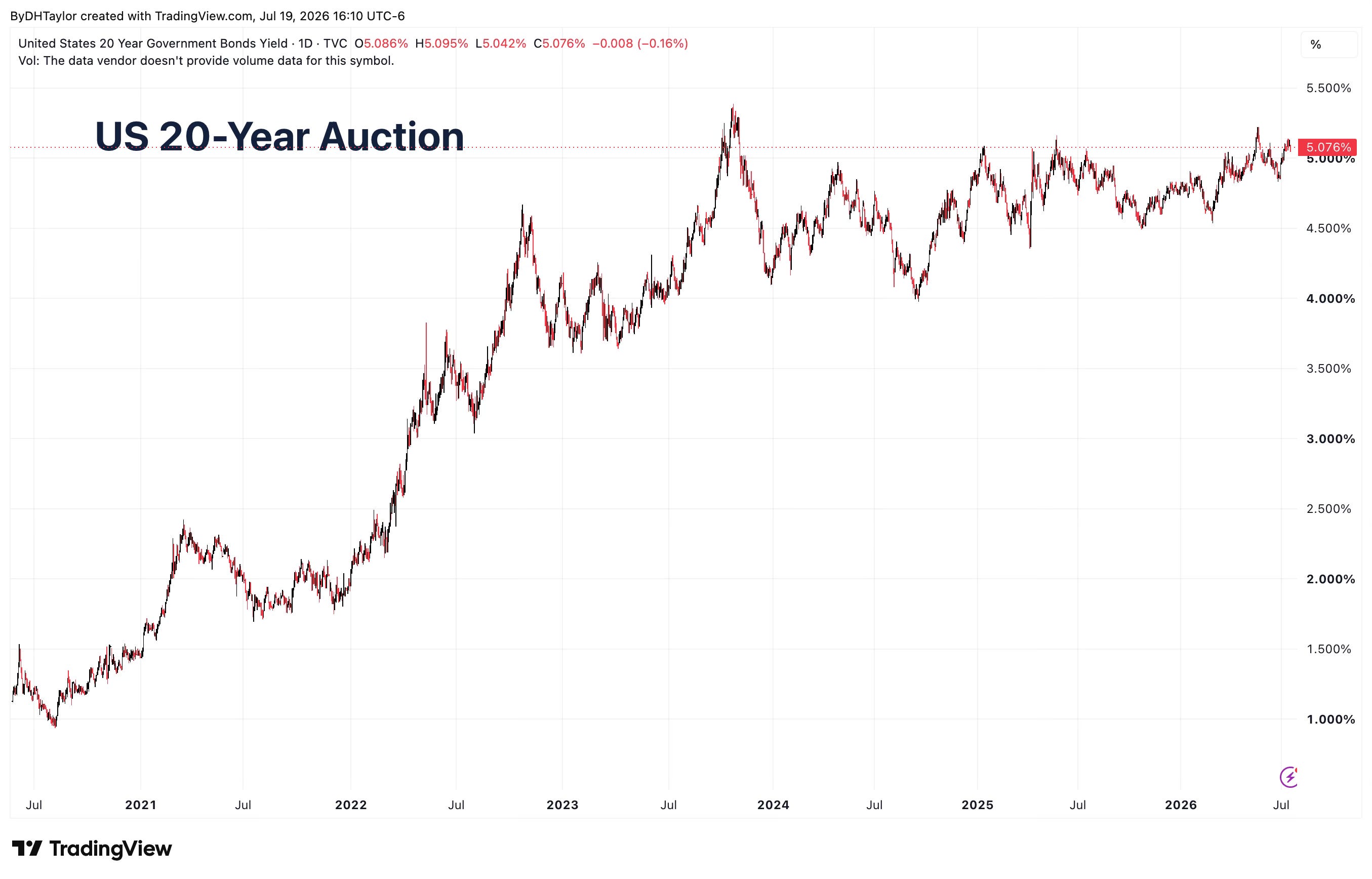
The 20-Year Treasury Auction is on Wednesday, and the yield has crept above the 5.00%. I expect the auction to go without any real concerns. If you look at the chart, however, the rate continues to trend slightly higher and higher. This will permeate throughout the economy eroding economic opportunity as yields continue to climb.
