

The unemployment rate declined from 4.19% to 4.08%—it is misleading to think this is an improvement
Total Civilian Labor Force and number of Employed continue to decline
Personal Incomes & Personal Expenditures, dependent upon increasing employment, are trending lower which will result in declining revenue growth for companies
The unemployment numbers continue to show a softening employment situation via deteriorating total Civilian Labor Force and participation. while the math shows a decline in the unemployment rate, this is misleading in the overall picture.

Civilian Labor Force data
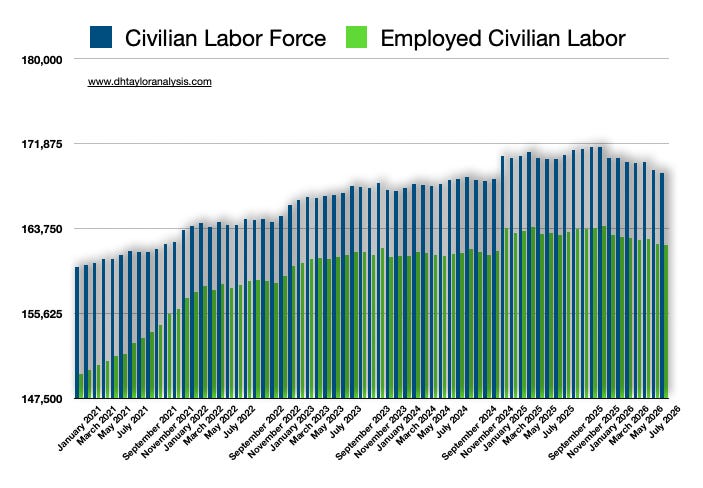
The chart above shows what is happening within the labor force. The total number of individuals that are considered within the labor force has been declining for the past several months. Along with that, the number of those employed has also declined.
If you dig enough, you find that the those of core working age, those between 25-54, that core demographic is still largely employed. This translates to those dropping out of the labor force primarily being outside of that demographic: <25 and 55+.
This is not a one-off, but instead represents a bigger picture where a core demographic has permanently left the workforce. Whereas the United States had previously employed 171,495,000 individuals in December of this year, the economy now only employs 169,094,000 people.
Simultaneously, and considering the population gains since, the United States previously employed 67.3% of the total population in the first four months of 2000, only 61.4% are currently employed—Let’s Make America the late 1990s Again.
That decline of 5.90% of total population not employed is a loss to the country’s opportunity. Most likely, that potential will not come back.
Unemployment data
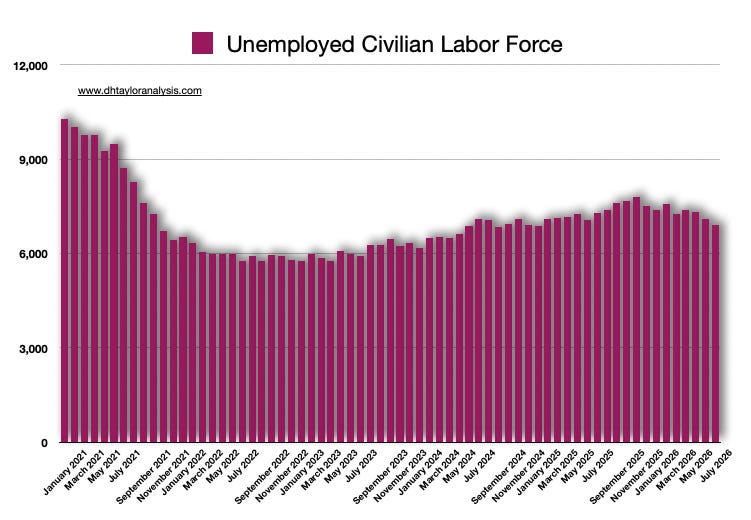
Simultaneously, the number of those within the labor force that are unemployed is declining as well, and I maintain that the math on this is misleading. The unemployment rate dropped from 4.2% to 4.1%, which anyone wanting to say that this is the greatest economy the United States has ever witnessed would point to this datapoint as proof.
All of this is important in that the numbers add to the aggregate of what the country can produce in a year, and if less are employed, there is less added.
Participation Rate
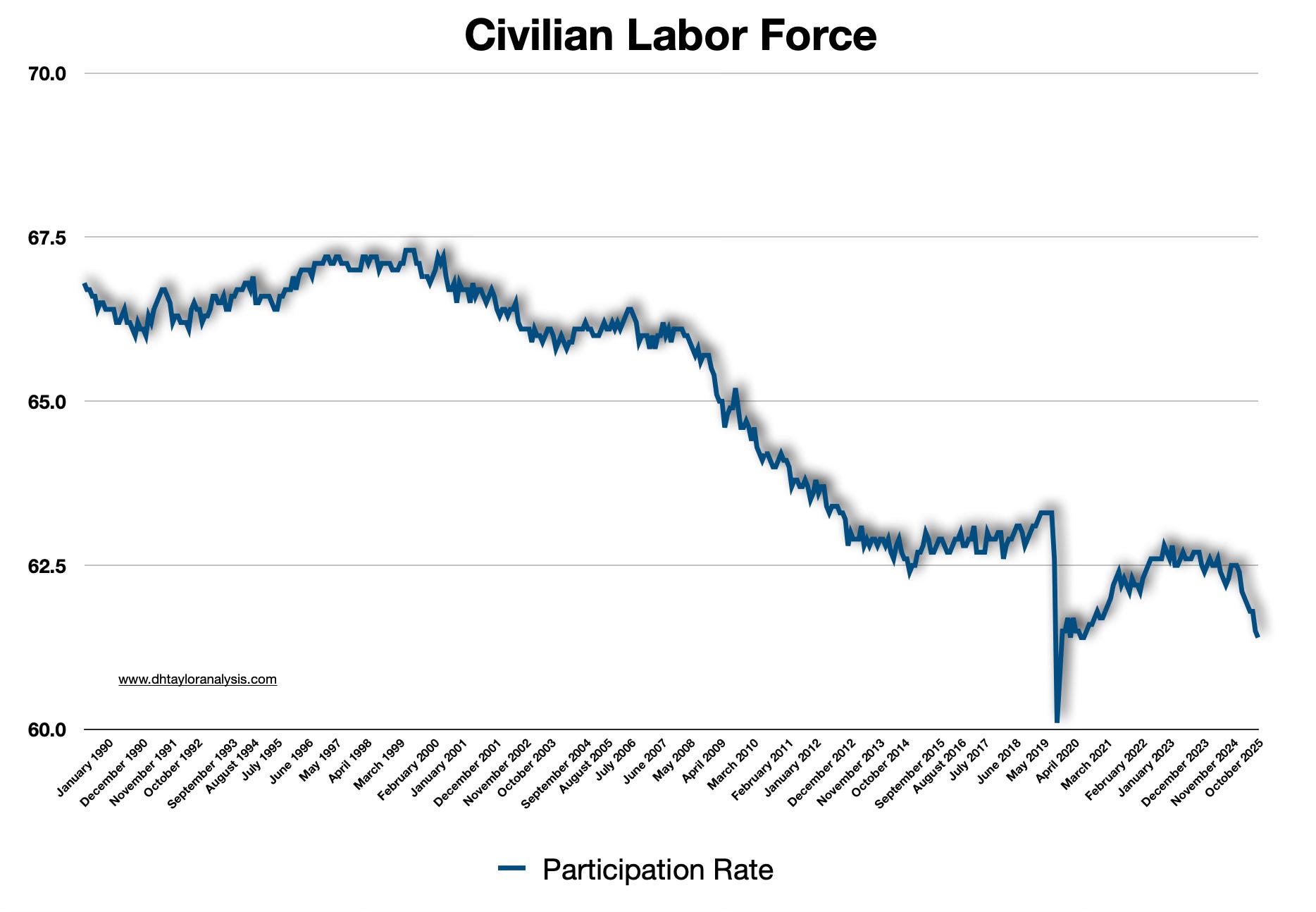
Then there is the participation rate, which has been moving downward for years. I noted the numbers above that the United States peaked around the first four months of 2000, and have declined steadily since then. While the economy continues to expand, of course, some opportunities within the economy are shrinking and not all are participating in economic opportunities. Eventually, this will add up to slower growth for the overall economy.
The above numbers, the 170M total civilian labor force, if the 5.9% of individuals were to earn the median income in the United States of approximately $60K, that amounts to about $600B in earnings within the economy—that is not happening.
Initial Claims & Continuing Claims


Just to compare and reiterate, both the initial claims and continuing claims are softening. This is in line with the data points above. This also tells me that the country is still not nearing a recession where there is a sharp economic downturn. Instead, the economy plods along, albeit at a continually slower pace (last week’s GDP growth rate of 1.5% is in line with that).

Personal Incomes versus Personal Expenditures
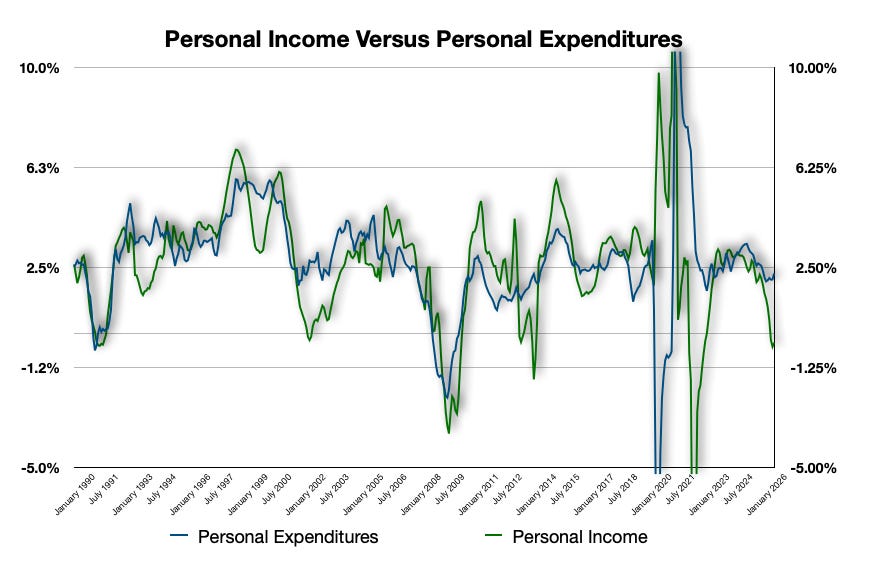
The economy still runs on the same engine regardless of how investing in AI is going. Looking at the chart above, incomes drive consumption, and the correlation is very strong. If we see a continually declining number of those employed, their ability to earn an income, which would contribute to personal income growth, will also decline. This is handicapping the economy over time, albeit at a pace similar to watching paint dry.
For now, I do not believe we are near a possibility of a recession. Slower economic growth, yes. Recession? Probably not given the information we have right now. There is inflation, however, and with interest rates moving back upwards, this too will drag on economic growth.

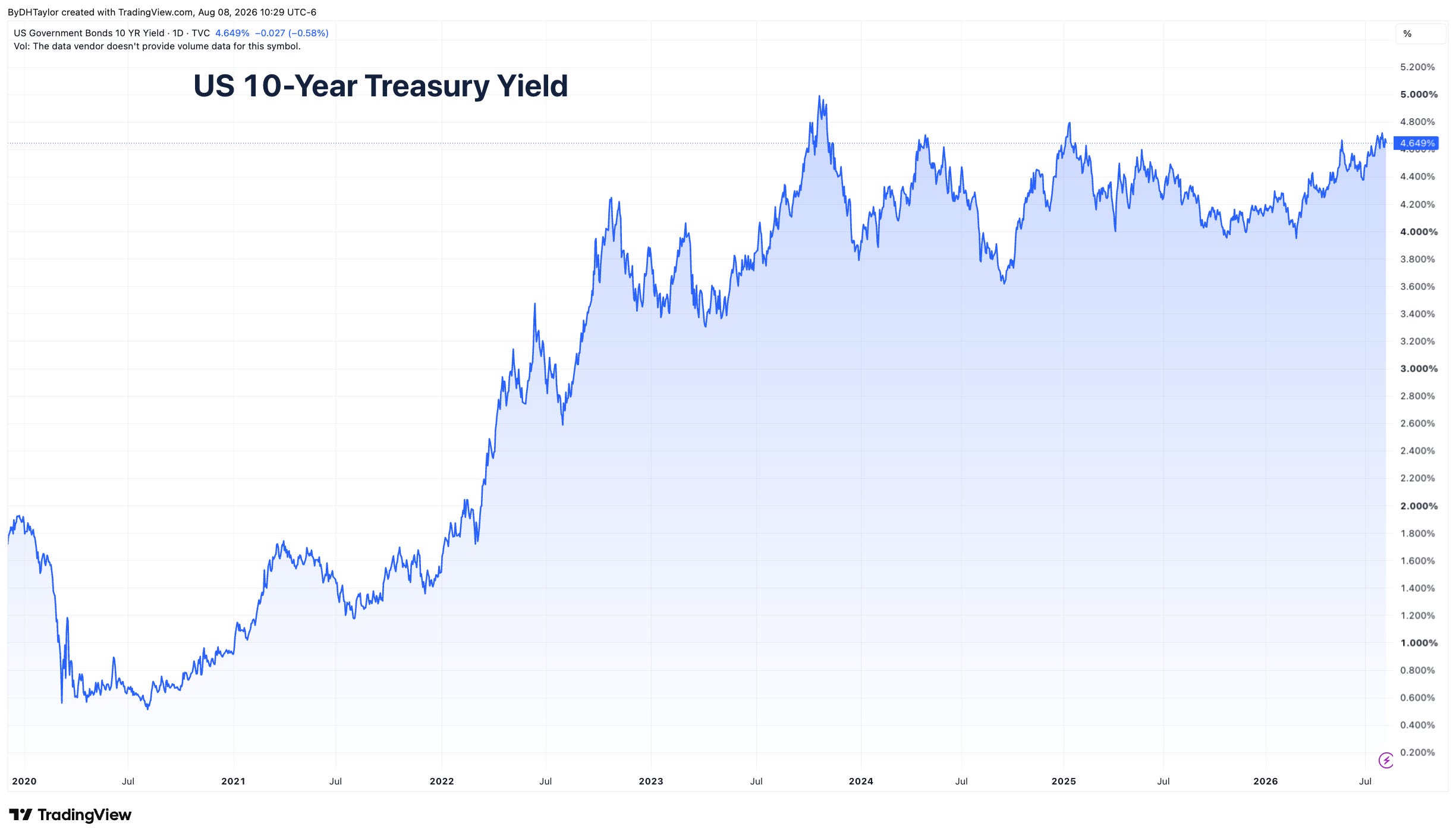
The bond market is nervous on inflation and longer end interest rates have been pressured back upwards. Inflation numbers are likely to push the Federal Reserve to move, however a continually softening employment situation could give reason for the Fed to pause.
Higher interest rates will work to slow economic growth via higher borrowing costs—this just might be one of the Fed’s strategies. If the bond market moves on its own, and the Fed merely talks tough, economic activity may contract enough to bring price pressure growth downward.
In the meantime, having the tariffs struck down will assist in price pressures declining. What I don’t see are prices dropping in response to the removal of the tariffs—why would they? If consumers already paid the prices of these goods, surely they can still pay the same prices?
I maintain that bond yields will continue to move upwards over time. I expect the 10-year to eventually breach the 5.00% level, but likely not much beyond that.

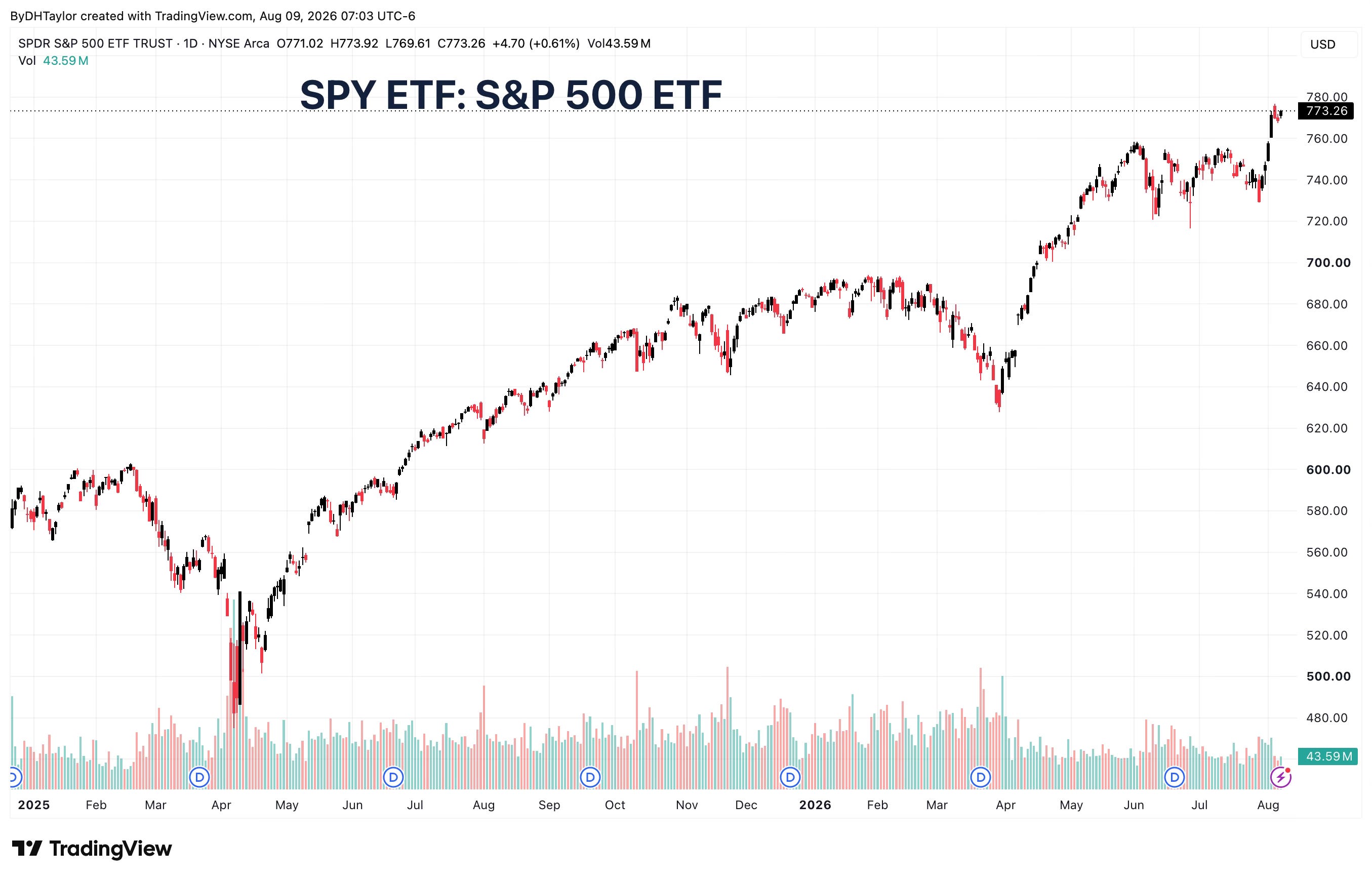
I do not see a recession given the numbers we have. I see a continually slow-moving economy. Price pressures are going to be dealt with first, and the Fed appears to have made that clear. I have seen a few print that they believed 75 basis points might be added to the overnight borrowing rate just this year—I thought that was high, but not impossibly high.
In the meantime, it appears the AI trade is back on this week as the massive 10% 2-day rally pushed equity markets to new, all-time highs. I’ve been plodding through and selling options against these moves while continually piling on new put positions with the proceeds of the sale of the calls. I have time with about 6 months for reality of the economy and the AI trade to materialize. I have also been selling off put positions on TLT ETF as I think the bottom in this cycle is close.
I don’t see the valuations in this circular economy, nor do I have a ton of optimism in economic growth. These big surges we’ve seen in the equity markets, to me, are opportunities to sell call options and take in premium.
