

We have new information on the economy with last week’s employment data and this week’s inflation data. Each paint a picture that the economy remains firm, and price pressures are not abating.
What will the Fed do next?
CPI data reports a 2.89% Core annual growth rate, and pointing higher
Employment pushed above expectations with a 165K increase in non-farm payrolls, and several upward revisions to previous data
So what?
The CME FedWatch gauge shows a strong likelihood of a rate increase in December
The market is preparing for higher interest rates from the Federal Reserve. While the Fed will push interest rates up somewhat over the following few months, mostly I believe there is a limit to how far they will go.

Inflation


Price pressures rose again, and this is the theme ever since Trump took office. The current Core CPI inflation rate has risen sharply on a year-over-year basis from 2.56% to 2.81%. This spooked the market, and interest rates shot up abruptly.
While previously the trajectory for price pressures was slowly downward, interruptions in the economy have pushed both the headline CPI and core CPI up on a year-over-year basis.
Tariffs and the war with Iran are to blame for the inflation increase.
Another variable is the cost of, say, building a house, or butchering an animal for sale at our local grocers. There have been unintended consequences from mass deportations of immigrants, regardless of status.
Without labor to do these jobs, this has driven up costs. In other words, firms have been getting away with not paying the “going rate” for labor by hiring immigrants willing to work for less than what the going rate is, and that has kept costs down—it also allowed for larger margins for firms, which we continue to see record levels of profits in the stock market.
This all adds up, and this is why we continue to see increasing price pressures.
There will be an eventual end to the war between the United States and Iran. Oil will flow through the Strait again—the price of oil has fallen steadily since approximately the 30th of October, currently sitting at $86.50 as I type. This will factor in once refining capacity catches up, and we see the flow of fuel to suppliers move through the system and get to the pumps—here in New Mexico, I am seeing $3.25 at the pump, which is pretty close to where things were on February 27th, the day prior to the beginning of the war.
Tariffs will eventually go away, and with that, the increased costs of almost every single item on the shelf of every single thing Americans purchase.
Because of this, over time, I do not believe the Fed needs to push interest rates up rapidly as they did from COVID and the war between Russia and Ukraine, which also pushed prices for oil upwards, which contributed to inflation.
Employment


Employment remains firm as the non-farm payrolls increase of 165K shows. However, this is somewhat misleading as there were also downward revisions in previous months.
Breaking down the labor force also shows what is occurring in the labor market.


Previously, the Civilian Labor Force had seen an uncharacteristic downward slide over a few months, which is something that I noted as important. Now, there is a return to upward moves, which I think this is all attributed to government jobs where some individuals did nothing and simply lived off of their severance packages. Now, it looks like the party is over, and more of these individuals have reentered the job market and are being counted again—the participation rate helps show more consistency.
With continued participation increases, this too shows that the Fed has the ability to move interest rates higher but not have to fret about labor market risks.

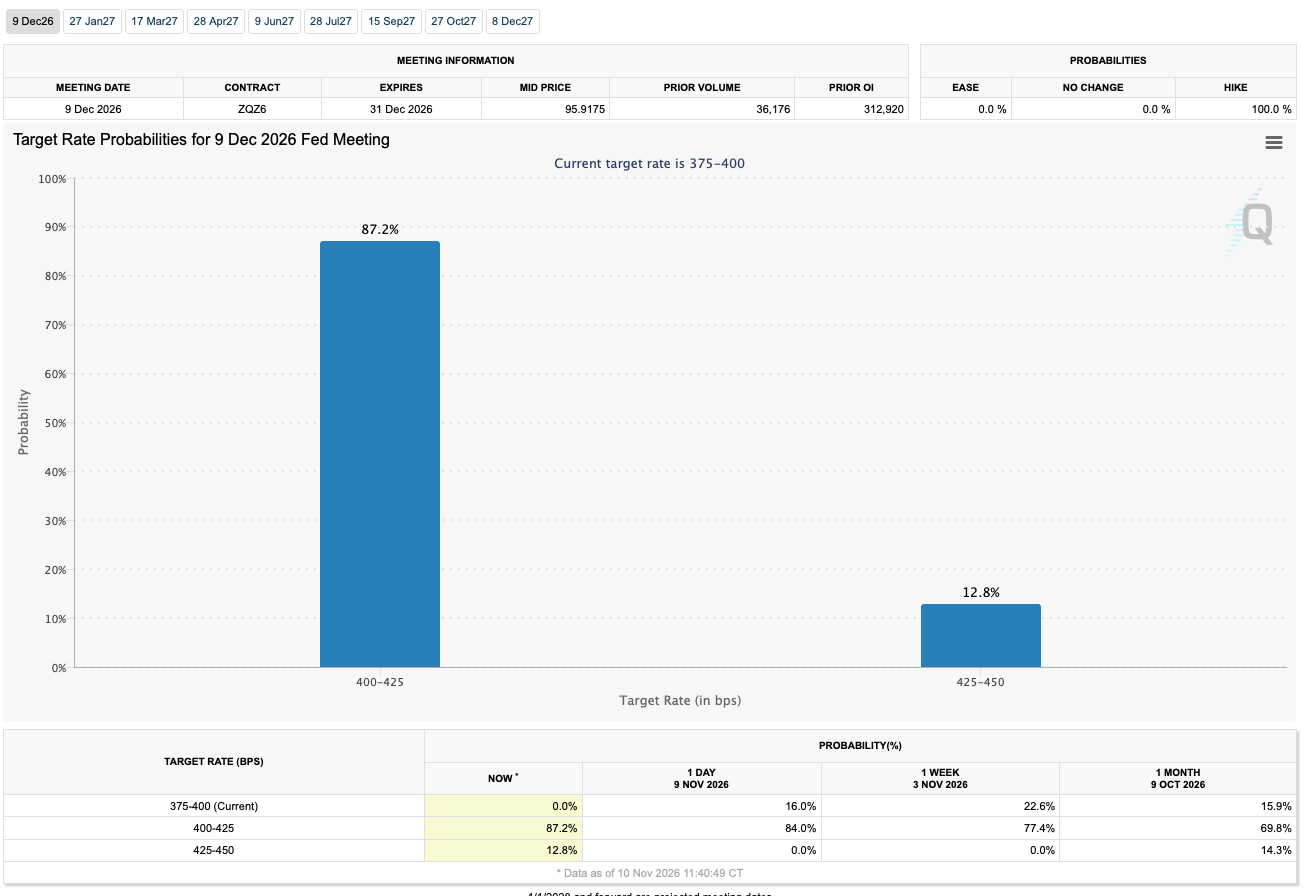
The latest data pushed the FedWatch gauge to 87.2% as to the Federal Reserve raising interest rates in December. The Fed tends to be directed by the market’s expectation, and I reiterate here that I believe the Fed will raise rates.
The biggest issues with price pressures are the tariffs and ongoing war with Iran, which has pushed oil prices up from diminished supply. The price of oil shooting upward is an artificial price shock, and should there actually be some resolution, price will come back down.
For now, energy costs to deliver food and goods has pushed prices upwards, which there’s no surprise there. Resolution and a return of normal flows through the Strait would rapidly bring the price of a barrel of oil back down to the $60.00 level, but that does not mean gas prices immediately drop back to 27 February levels—I am seeing $3.75 a gallon here in New Mexico; still 20% higher.
Once energy costs return back to normal, transportation costs will decrease, and prices should come back down. That will allow the Fed to get back on the sideline with interest rate increases.
In the meantime, the other issue for price increases are tariffs, which that has attributed to the increase in costs. With a Blue Wave showing up in a couple of months, perhaps legislation can shift tariffs, but that would take many, many, many months to see results.
I believe the Fed moves now, then gets closer to a wait-and-see period for the next move. I also believe that inflation prices will begin to slow from here and likely not move higher much more.

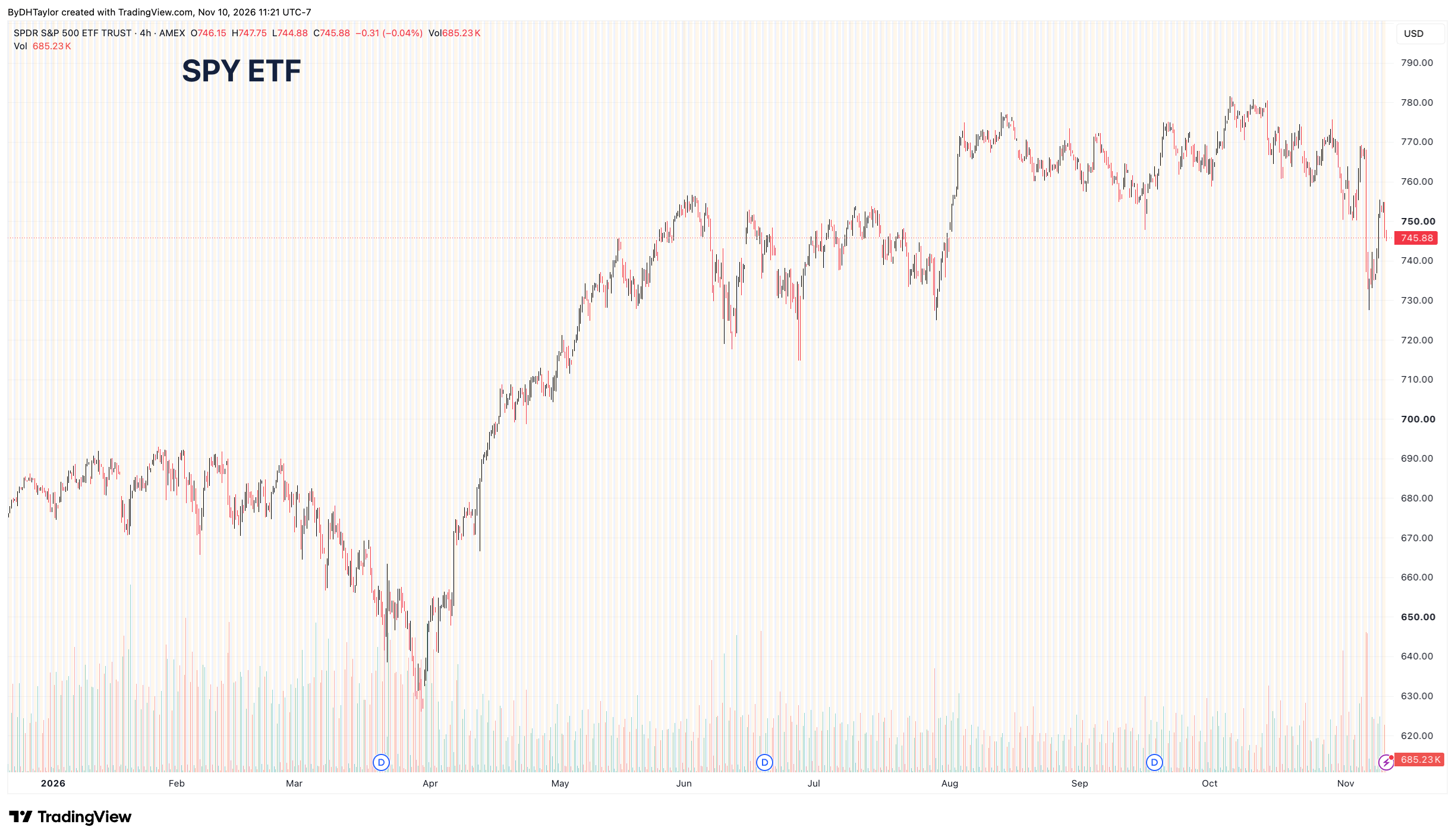
The stock market has been shifting from the all of the noise, but there is so much more going on that is also contributing to price moves—espionage being the latest.
A shift upward in interest rates means classical economic analysis would mean a shift in stock valuations.
When you analyze stocks, you take an “all-else-equals” approach to looking at how much a company would be worth. If a firm is expected to earn a certain EPS over the following 4 quarters, but then the financial variables shift within that timeframe, the valuation shifts. Interest rates moving higher, all else equals, would shift future valuations lower. This adjustment is applied broadly across the financial system.
The world does not necessarily operate in an all else equals landscape, however. Instead, expectations are that firms will increase revenues within this environment to achieve their respective earnings growth rates. This means higher costs for consumers paying for these increased earnings goals, which there are limitations there as incomes are finite—an, not necessarily growing rapidly nor keeping up with the pace of inflation.
I continue to maintain a large short position on the broader stock market (SPY ETF), and am expecting additional fallout as the market progresses forward while also re-evaluating the profit potential of some of these AI stocks.

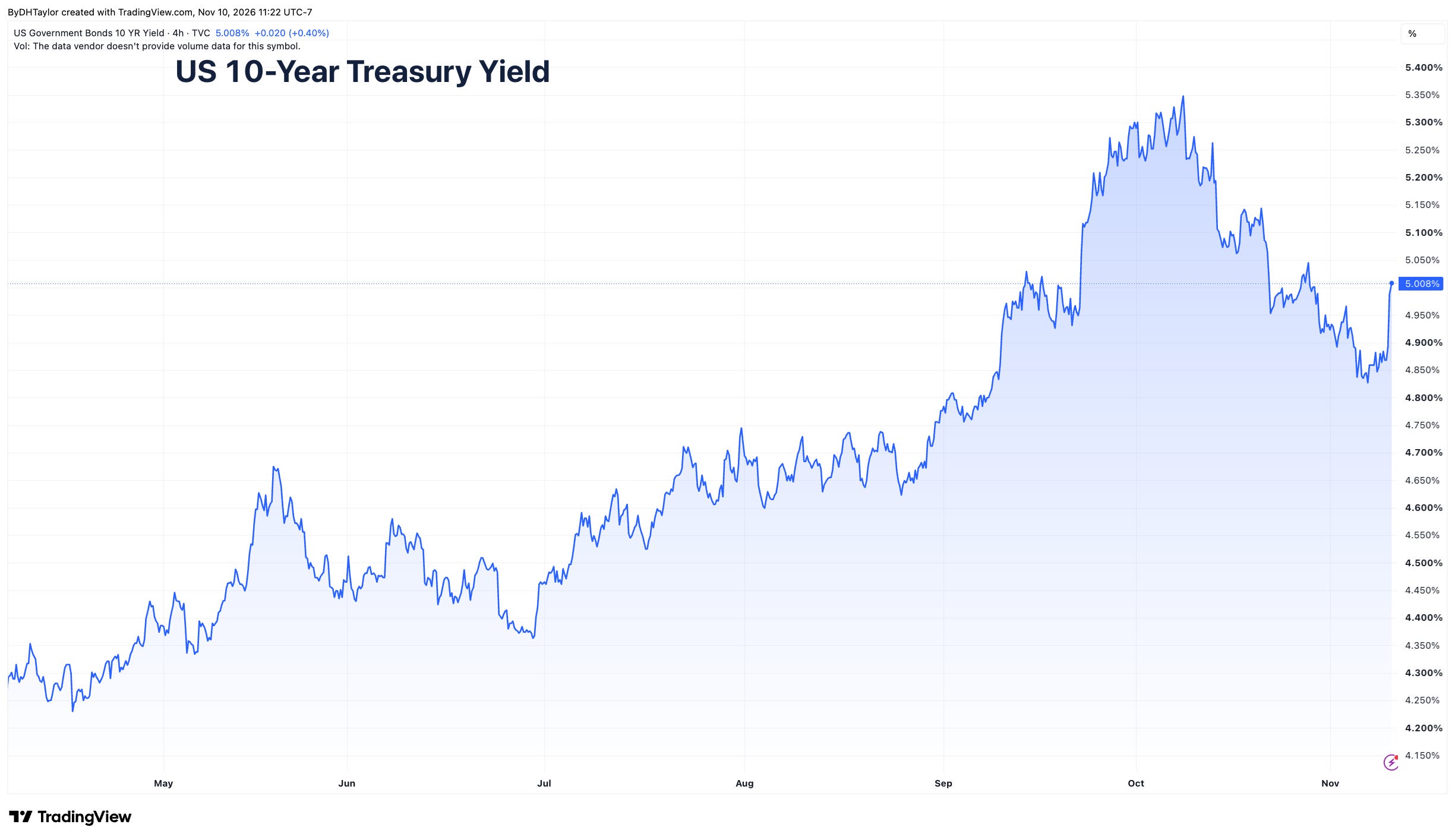
There has been another surge in bond yields. The latest comes from this current stronger-than-expected employment numbers along with the increased inflation numbers.
I have seen some reports from notable market participants saying that they believed the 30-year yield could top 6.00%. I can easily see that, but I believe we are a long way away from that right now.
First, I fully believe that the Jenga scheme that is AI will run its course, and the demands for debt from buyers will dissipate, which means more buyers for US debt instruments—that will keep prices up, pushing yields down.
I believe the days of lower interest rates are gone, but I also believe the progression higher will not be abrupt from here.
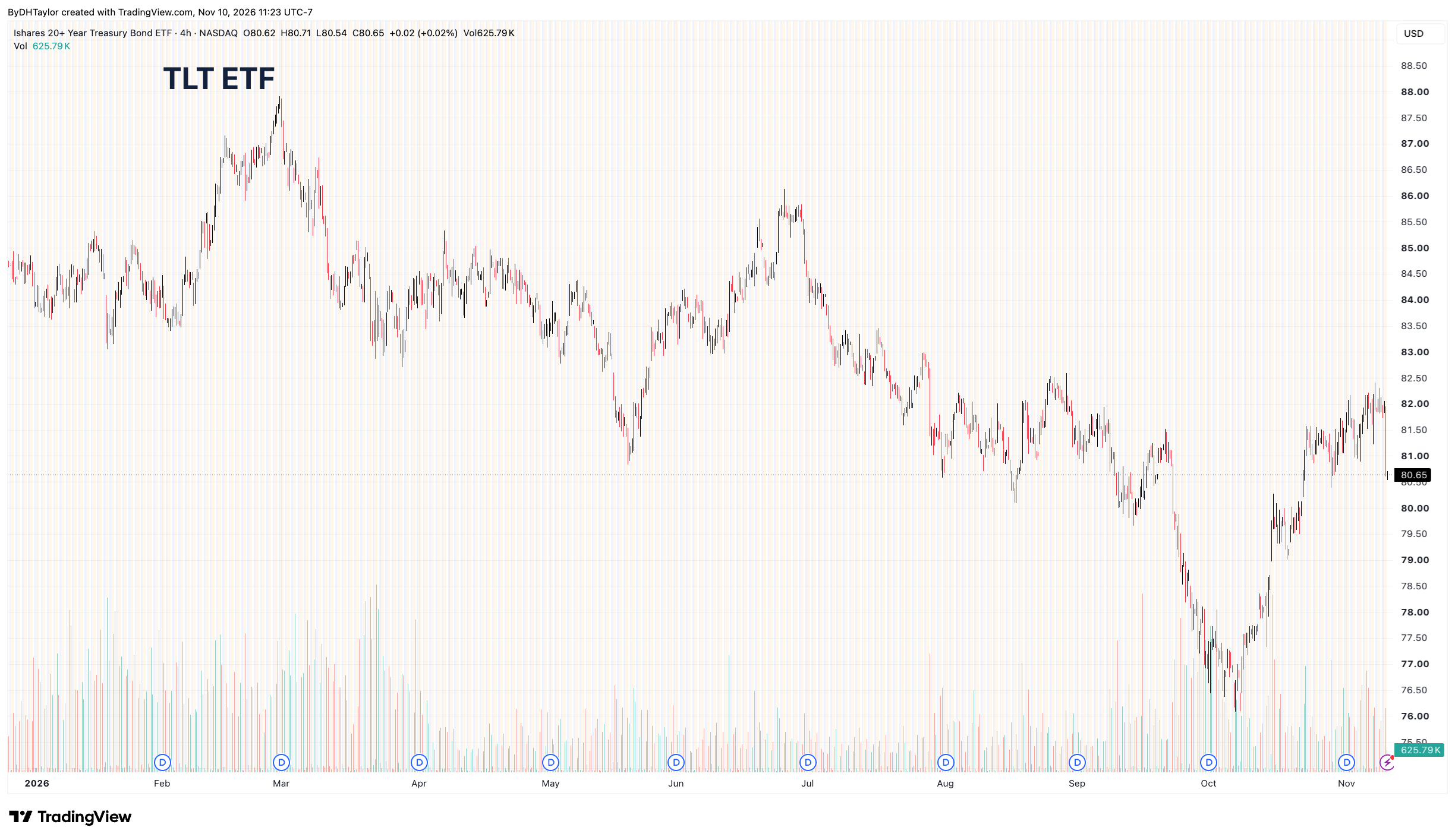
I sold my short TLT ETF position a couple weeks back on that sharp drop lower. I have been selling short vertical put spreads on TLT ETF with a small amount of time in the options to bring in premium, allowing them to expire worthless. It is a very slow process, akin to watching paint dry, actually. Nonetheless, this continues to add to my account size, and if I have enough of these types of positions, I continue to see growth in my balance. Slowly. Like paint drying.