

Last week was a massive rollercoaster, and many called for the AI bubble to be bursting. This week, Jensen was reinstated in all of his jacket-clad glory.
There’s something else going on underneath this all, though:
NVDA reported earnings after the bell on Tuesday with solid beats across the board, then sold down on Wednesday and throughout the rest of the week
Moves lower in NVDA started long before the unraveling of Huang
Anthropic offered on Thursday and opened above its offer, but broke that level on Friday without much support
So what?
While NVDA took most of the hit from last week, the move began prior to all of the latest issues, calling into question what might be ultimately going on

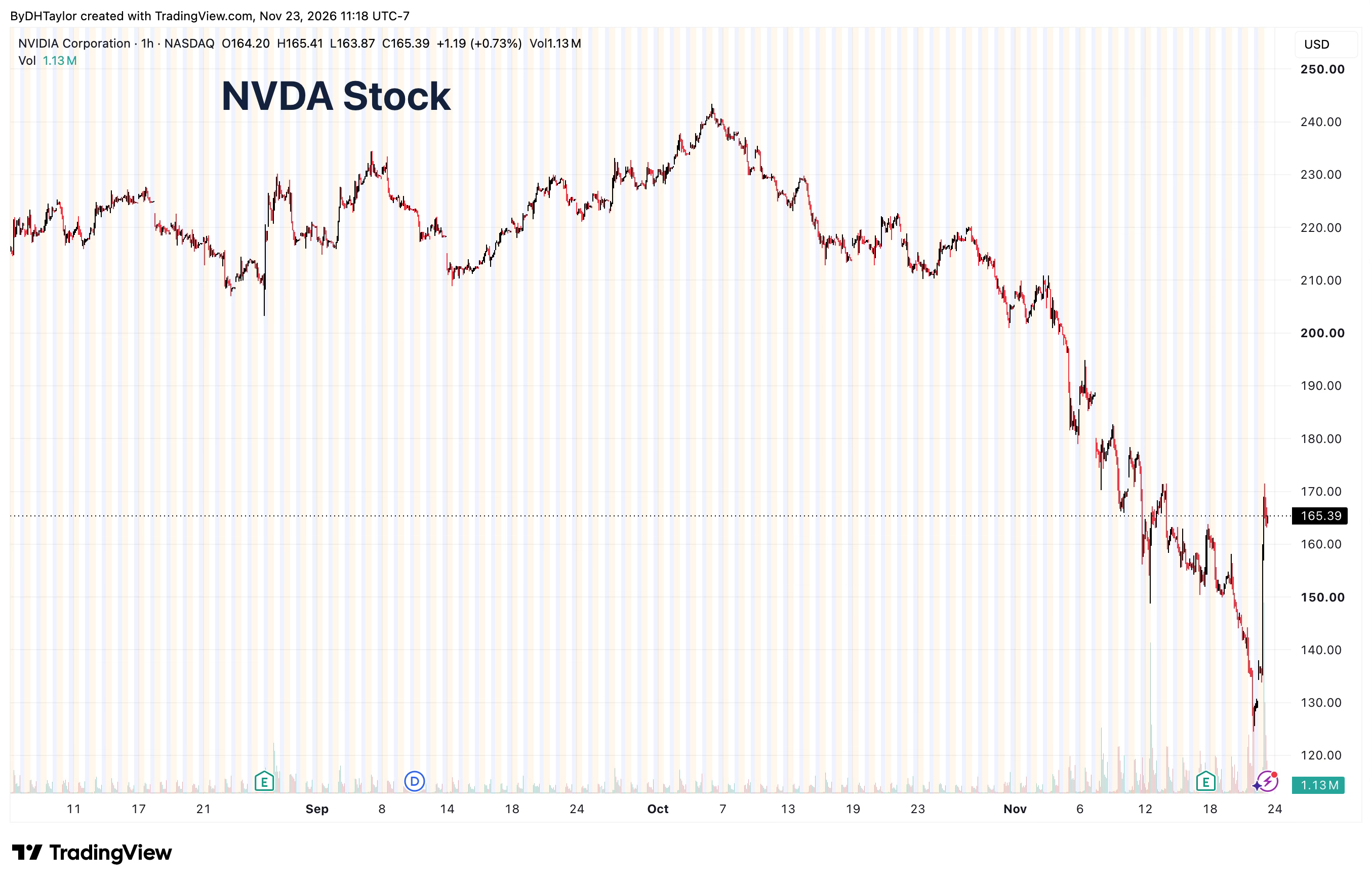
Last week AI stock selloff felt as if the tide was being pulled out for a pending tsunami to hit the shores. The most important thing about last week’s moves were that it was mostly NVDA stock being sold precipitously. Then, other key AI players sold off via guilt-by-association.
Today, Jensen was reinstated to Nvidia as CEO effective immediately. NVDA and other stocks rallied significantly.
Looking deeper, though, notwithstanding the losses and uncertainty of the Jensen ousting, it is important to keep everything else in context.
Look at the chart above: The AI trade, as well as Nasdaq more broadly, all topped out at all-time highs in the beginning of October, then have slid downward over the past couple of weeks. The Jensen ousting was the last proverbial straw on the camel’s back to really send NVDA lower. This occurred prior to the resigning 12 days ago. This leads me to believe that there’s more going on.
For context, keep in mind that just Tuesday after the bell, Nvidia released its earnings with strong beats across the board and guided strongly through 2027. Yet, on Wednesday NVDA closed lower…. then Thursday and Friday saw far more selling.
Nvidia is basically saying they are poised to continue hyper-growing. Yet, investors have doubts.
Anthropic IPO
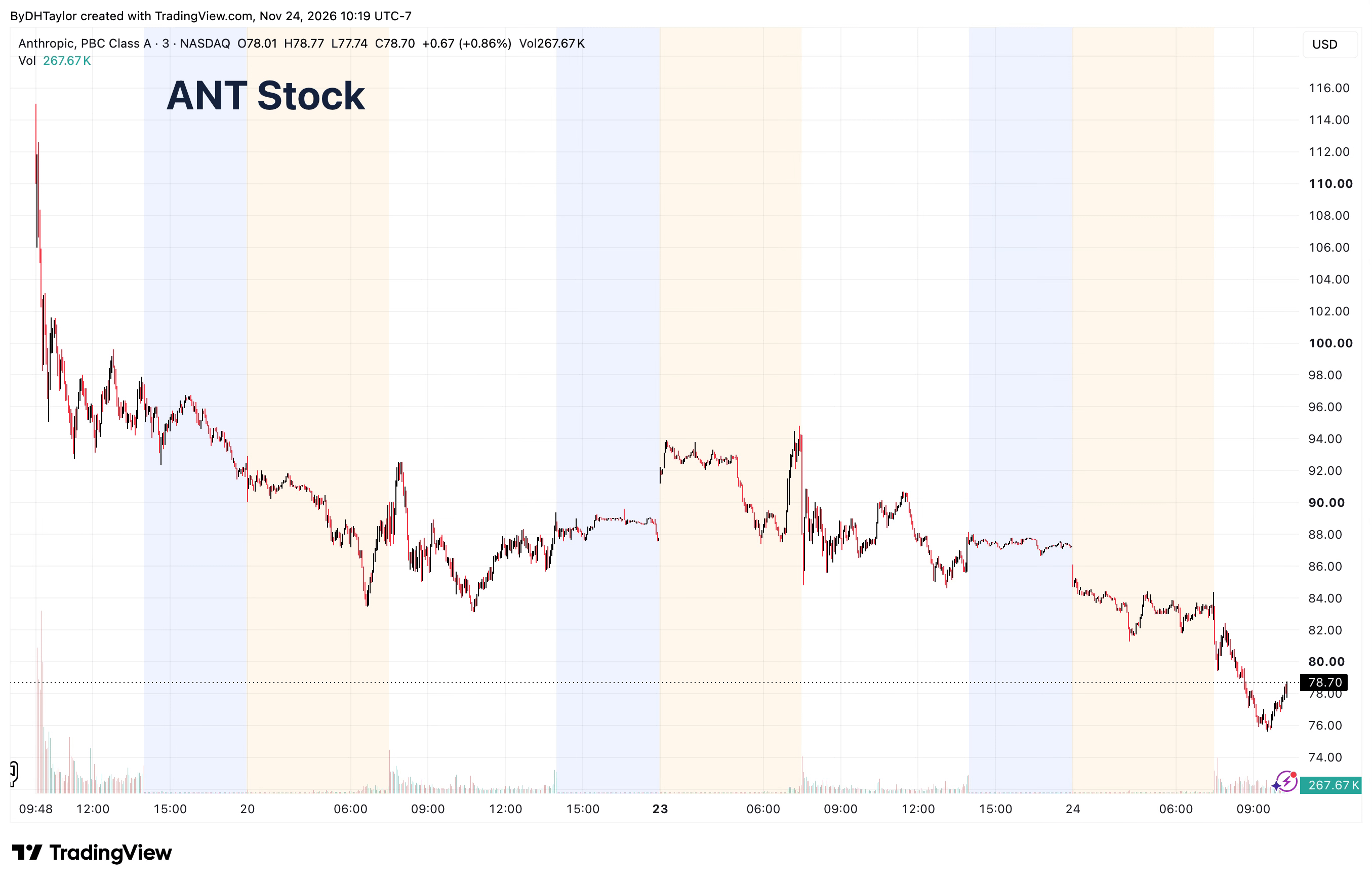
Last Thursday, Anthropic did its IPO to what they called an over-subscribed issuance. The IPO is the largest in history. That day’s trading in ANT stock saw the highest dollar volume push through in one day.
And, yet, ANT stock broke its offer - a huge no-no in markets for IPOs. This should serve as a warning for investors in the AI trade. Anthropic could be one of the biggest poster childs of the AI trade being 100% AI LLM. Yet, investors have soured on the stock almost from the beginning of trading.
The concerns for investors that exist with the broader AI trade would extend to Nvidia, the primary chip producer for the industry. If ANT stock cannot hold itself, how would the producer for the processors do as well?
Go backwards and look again at the NVDA chart and when the decline began: October 6th - 9th was the very top in AI stocks and the Nasdaq, which preceded the too-many-to-count affairs Huang was having. Those concerns that pulled NVDA stock downwards through that time period still exist.
There is more to the overall AI trade as it spills out into other markets such as debt and metals, and many other industries.

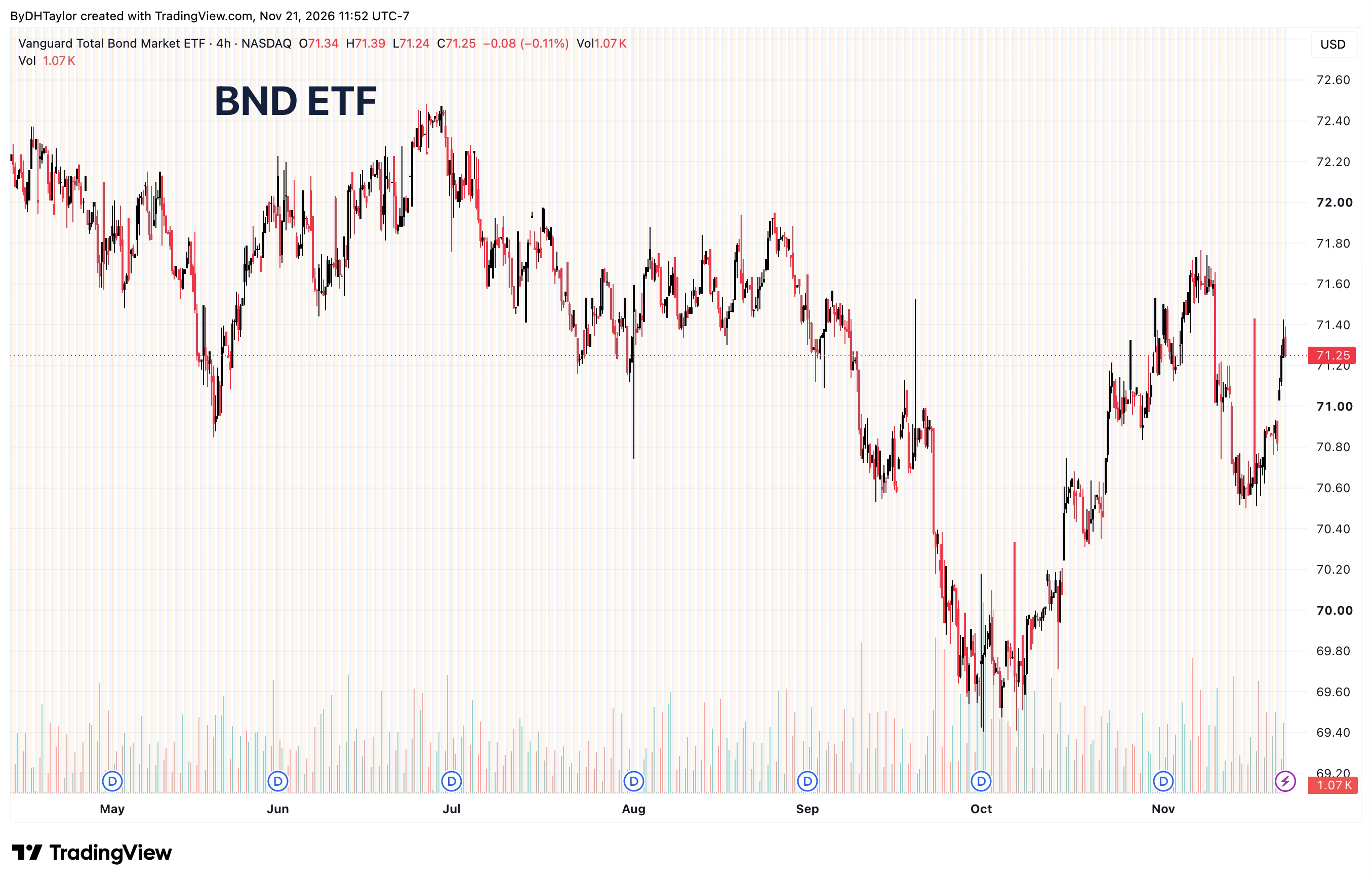
The bond market is a tale of two stories. First, there is the flight-to-quality we are seeing in higher quality debt instruments such as Treasuries—you can see this in the BND ETF above, where the total bond fund is seeing price move higher.
Higher quality bond prices could continue moving up if more selling continues; investors will protect their capital.
AI hyper-scalers are having an effect on the debt markets as they demand more and more capital investment with their outsized demand.
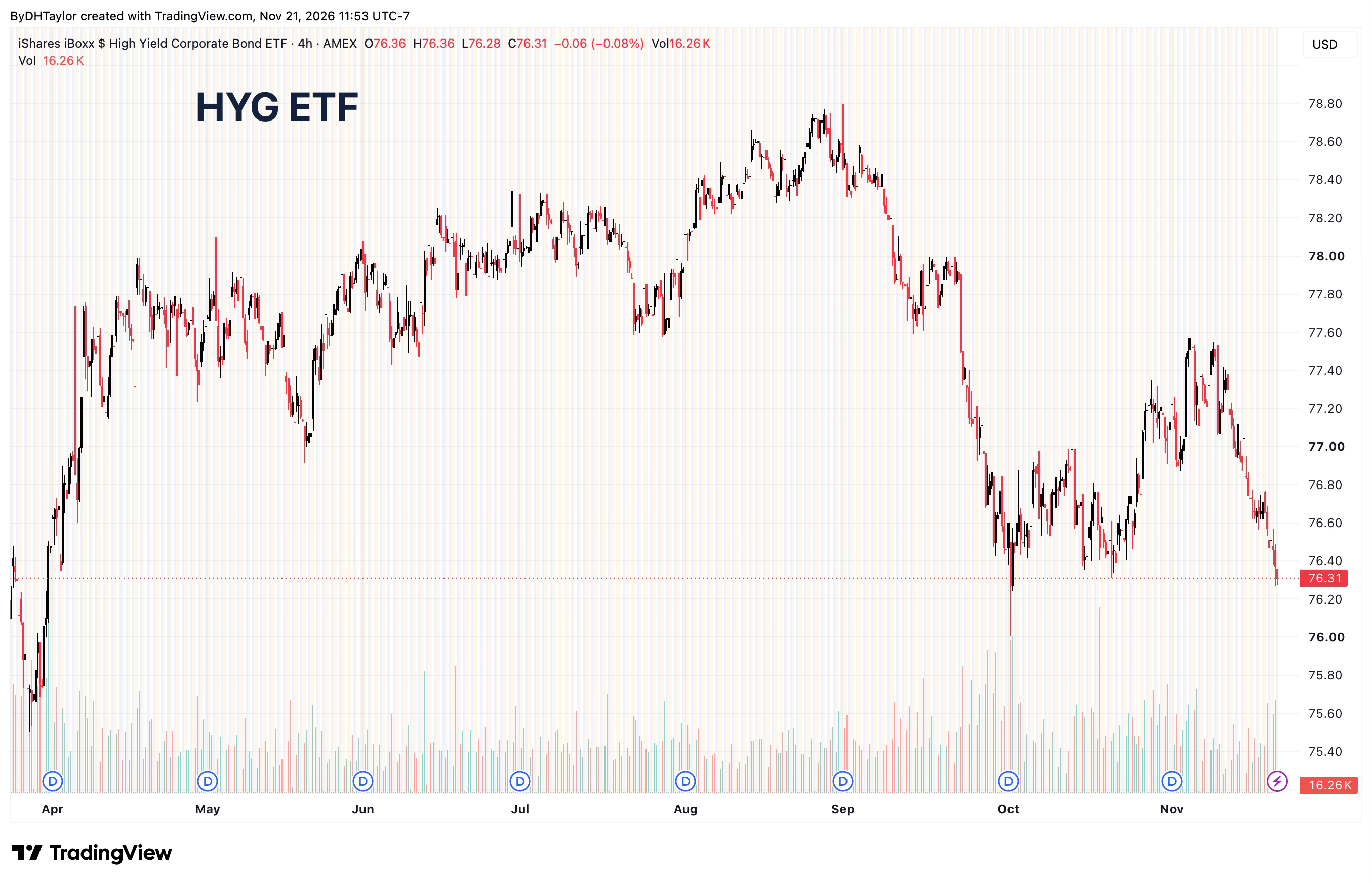
The above chart is High-Yield debt, or the HYG ETF. Price is coming down, as you can see. This is in contrast to the better-graded Treasuries. This divergence can coexist, and in fact, this is likely a real issue for AI hyper-scalers searching for cash to borrow.
Basically, investors are demanding higher yields to lend to borrowers. AI hyper-scalers may find it very difficult to find cheap money to borrow. Lowering price will attract more investment dollars, which drives up yields. That affects the ability to borrow more and more, which pulls Treasury yields upwards in an otherwise unnatural move.
Despite the safe-haven drives into Treasuries at the present, the dust will settle on the rally in NVDA stock, and the broader landscape for the debt markets will return to their pre-installment of Jensen.
If investor concerns persist in the AI industry from investors, the debt necessary to build the infrastructure will continually cost more and more.

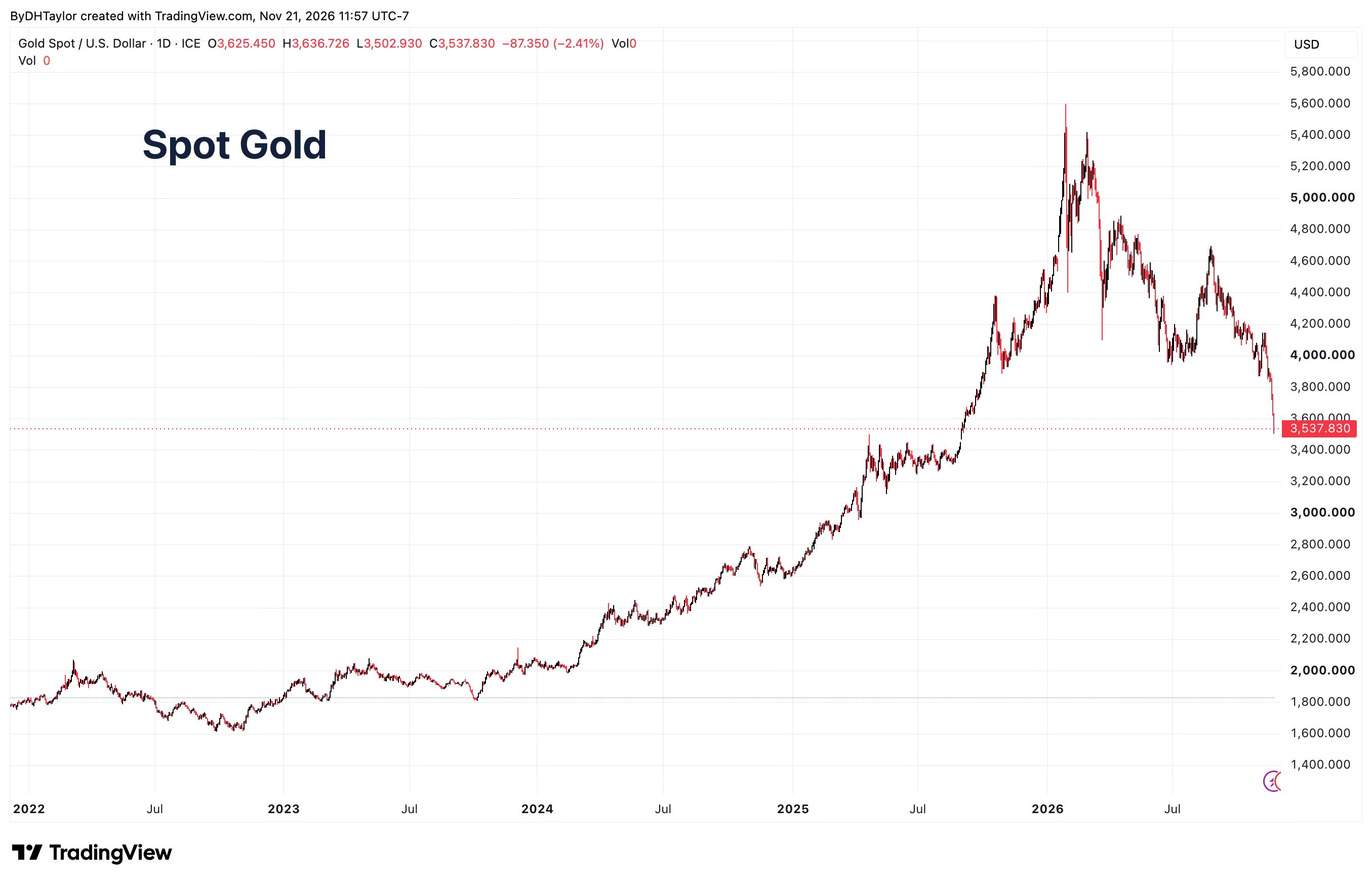
Both gold and silver are being offered heavily the past week. Some on the front lines say this is likely more about raising cash to help margins from losses in the AI trade, versus necessarily the trade being over with. There have yet to be big outflows from GLD and SLV ETF holdings, showing that many retail investors remain in the trade.
Higher interest rates will also add to pressure on gold. Gold does not pay dividends. So, when investors expect higher interest rates, and those interest rates are intended to pull asset prices lower, this activates selling in the metals markets.
The chart above is not the only metal selling off: Silver and copper have also come down sharply in similar moves.
That being said, however, as the trade breaks down, more selling could ensue, which could cause others to exit their holdings. While interest rates remain subdued because of the flight-to-quality from stocks to debt instruments, this could stem outflows from precious metals.

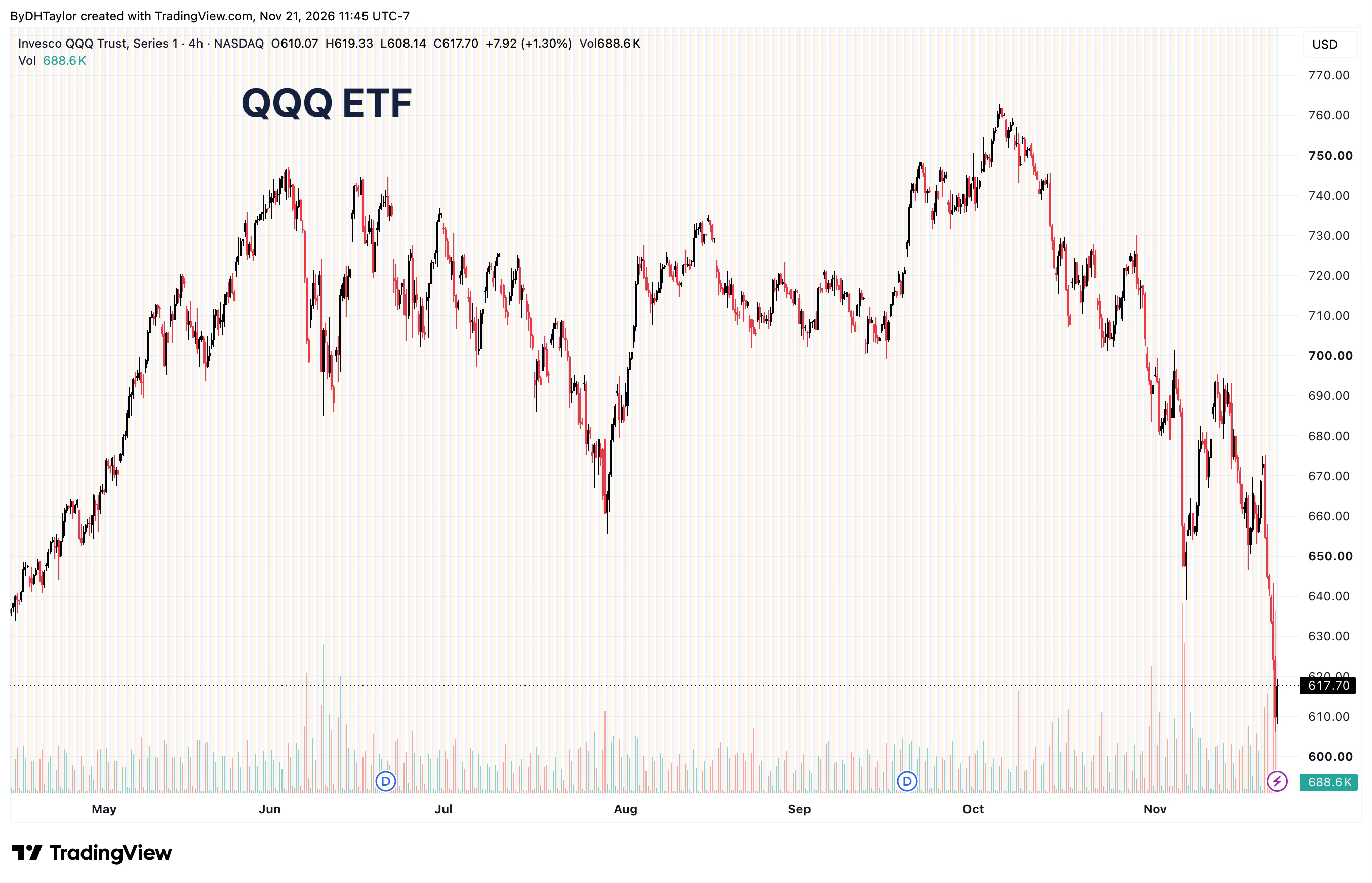
I believe the markets will get right back to their pre-reinstatement concerns of Jensen Huang. The massive debt needed to build the AI infrastructure continues to be a solid concern for the market. What pulled NVDA stock lower from the first week of October had nothing to do with the affairs by Huang, and his ultimate resignation.
Credit spreads are widening, and this will cost future developments for AI infrastructure more and more. While a great deal of debt has been issued already, the effects of high-yield debt being repriced downward will have an effect on mark-to-market holdings—that could push repricing of some holders if they are publicly traded—rippling through the market in micro waves.
While Treasury yields have taken a break from rising, the reasons for higher interest rates persist. I am no longer in my short TLT trade, but instead have been selling options under the market to bring in weekly premium—pure cash flow.
Eventually, I expect Treasury yields and corporate bond yields to slowly rise over time—the days of ultra-low interest rates to fund total economic activity in the United States and abroad are gone. Growth rates will be affected by this as financing costs are factored into individual company’s financing costs as well as consumers for credit cards, housing, student loans, and vehicle loans—rippling through the economy in micro waves.
While the immediate news of the Jensen return sent markets cheering, there are issues throughout the AI trade. I’m looking at this current move as just an intermediate move in a much bigger down move.