

Non-Farm Payrolls printed a massive 162K increase for August
Inflation releases for PPI & CPI hit on Thursday and Friday, respectively, and will indicate the pace of inflation growth
So What?
The Federal Reserve will not have any reasons to doubt employment growth at its upcoming meeting
And then?
Oracle will be posting its financials giving a look into its finances after announcing raising capital with debt and equity—this will indicate the future of the AI trade

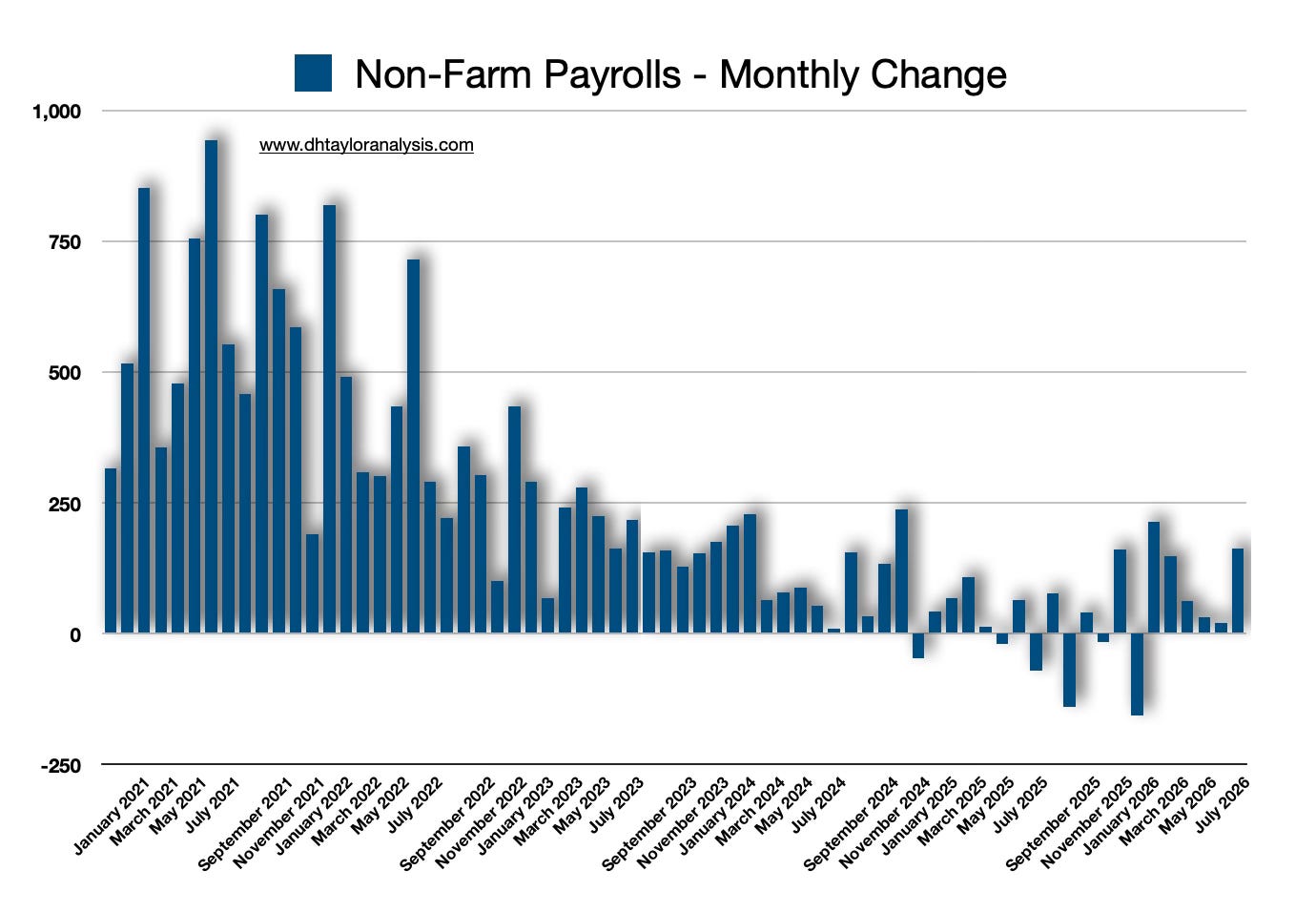
Nobody saw the massive jobs number print of Friday. In some ways, it is both good and bad. The good? Obviously, strong job growth would continue to propel the economy forward. The bad? Strong job growth will give the Fed plenty of room to breathe when they consider interest rates this week.


Total Civilian Labor Force and Unemployed Labor Force moved higher, which is a shift from what the economy has been printing lately. Overall, the shift back upward will allow for more contribution to the economy, but the numbers continue to be distorted. The longer trend may be employment capped at these levels.
On the news, of course, interest rates shot up higher. While there is a Fed meeting this week, along with inflation data printing, one of the biggest issues is the price of oil and how that will affect the future inflation outlook—I still don’t believe that the Fed will push too much too far.
I think the Fed is going to rely on the long end of the curve heading higher, and that in itself will draw down price pressures. I also think this is going to be a long process, that higher interest rates are now the norm.
Inflation
This week, data will be released showing inflation prices. First, PPI on Thursday, then CPI on Friday.
Consumer Price Index


Above is a look at previous prints on both Headline & Core CPI rates. Both have been capped and have begun to move back downwards; that is important. The problem is, however, that the Federal Reserve will not necessarily be looking at CPI, as its preferred inflation gauge is the PCE price index. That, too, has been softening and sliding downward somewhat.
Producer Price Index


Prior to consumer inflation prints, we get the Producer Price Index. This, too, has been capped and moving downwards along with CPI. Nonetheless, the price of oil continues higher and the latest price is touching $95.00 per barrel. Those prices are going to work their way into every day life, starting with producer prices as shipping costs are then transferred down to consumers. The trickle-through effect of higher input costs will reverse these gains being printed lately with inflation prices.
The bottom line on that is that the future of interest rates will be contingent upon the price of a barrel of oil. Neither appear to be going lower any time soon.

Interest Rates
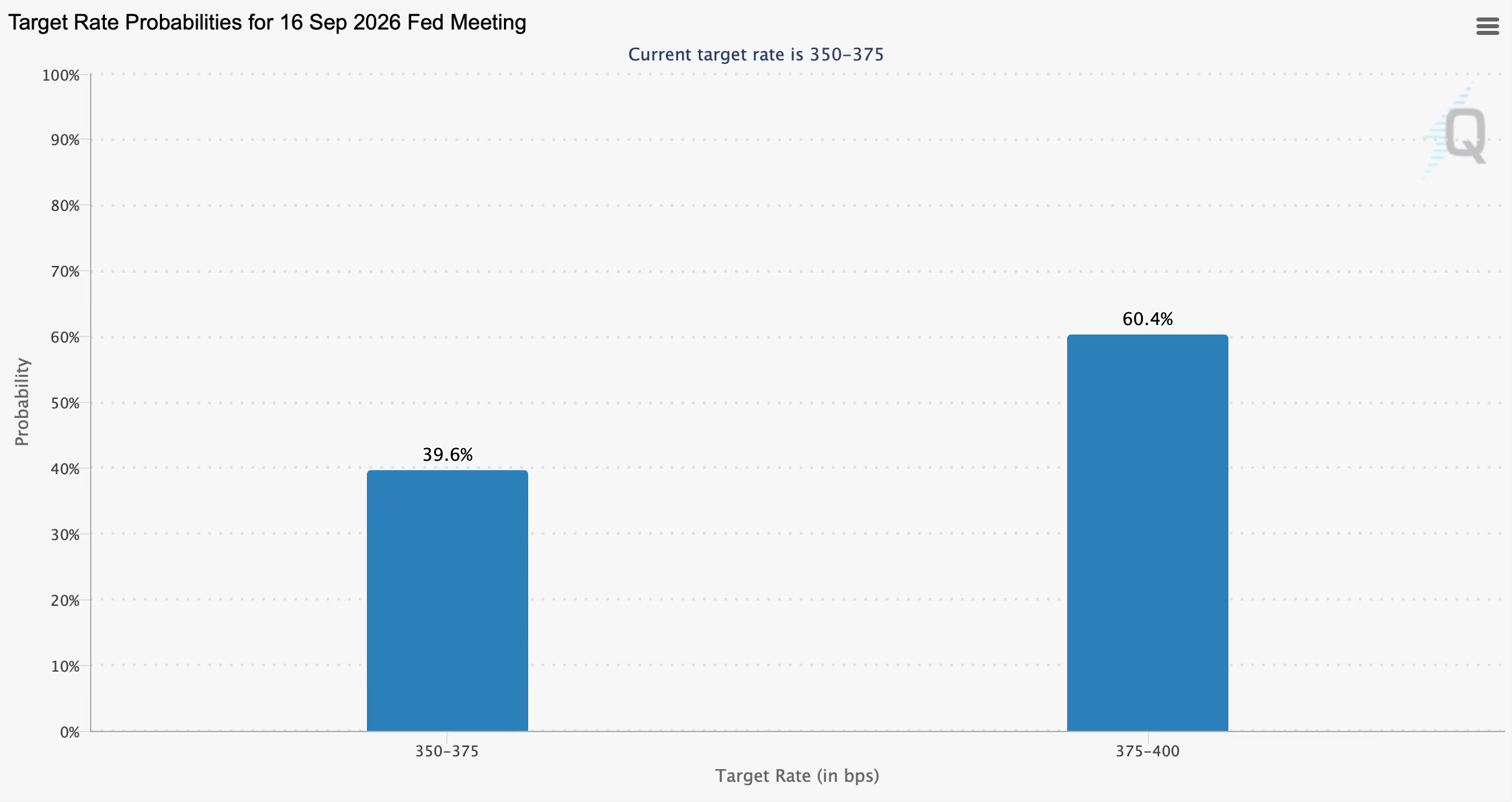
The CME Fed Watch is printing a 60% chance of the Fed pushing interest rates higher this week. My thinking on this is that the markets have pushed the Fed to do what the markets want the Fed to do.
What I do not see, and have been mulling around, is that the Fed likely does not have to do too much work. The long end of the yield curve remains tight to the point where the curve itself is steepening. These higher interest rates are going to do the work for the Fed over a longer period of time.
10-Year Treasury Yields
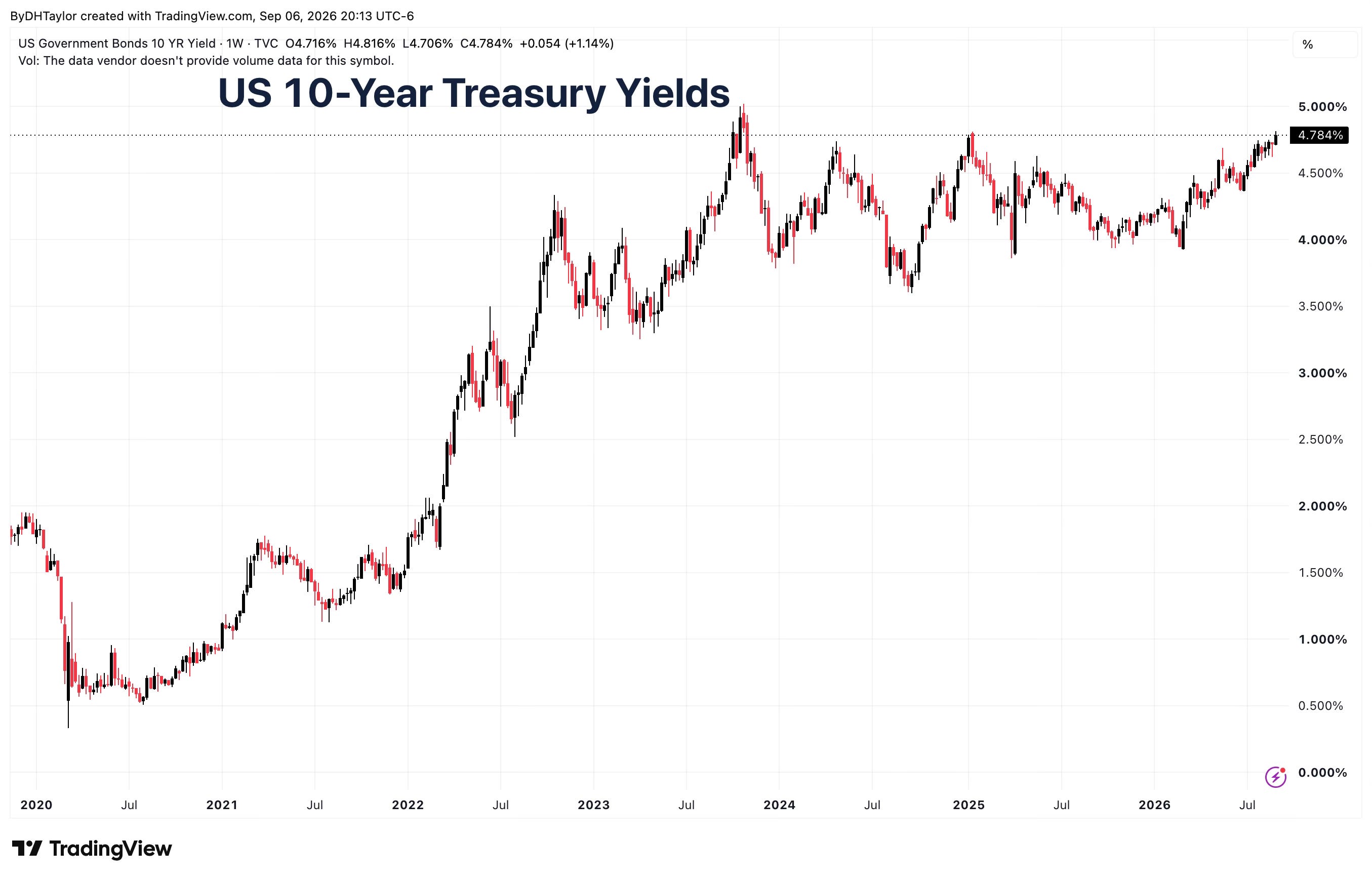
Yields on the US 10 have continued to move higher since the beginning of the War with Iran. From the perspective of inflation, and the potential of an outright global oil shock, I think this is just the beginning of higher interest rates as the new norm. Not only are interest rates being driven by the higher prices of oil because of the war, but the deficit has been far wider than expected, which this is driving investors to be able to demand higher interest to lend to the government—term premium.
It is not just the deficit and oil prices, either. These is also the demand from AI hyper-scalers taking a chunk out of the investment pie as they have borrowed heavily over the past couple of years.
Then there is Japan, one of the bigger issues that is continually contributing to higher interest rates.
Japanese Yen & Government Bond Yields


Something I have been continually watching is both the USD JPY rate and the Japanese Government Bond yields. Japanese Government Bonds have been propped up by the Bank of Japan via QE programs that have lasted years. In essence, instead of the Japanese government having to pay the true price for an enormous amount of debt (Japan’s Debt-to-GDP rate is 240%, 2x that of the United States), the Bank of Japan has been artificially suppressing borrowing costs for the Japanese government. That has also trickled over to the United States and other foreign countries where Japanese investors sent their funds abroad in search of better investment returns. It appears the time to pay the price is right now.
That also means that those funds that have flowed from Japan to the United States are likely to move back, albeit over a long time. The support that Japanese investors have provided the United States has kept interest rates artificially low in the US, yet still higher than Japan. I believe those days are over.
Watching the yield on the Japanese Government Bonds (JGBs) will tell investors what the US rates may look like in the future.

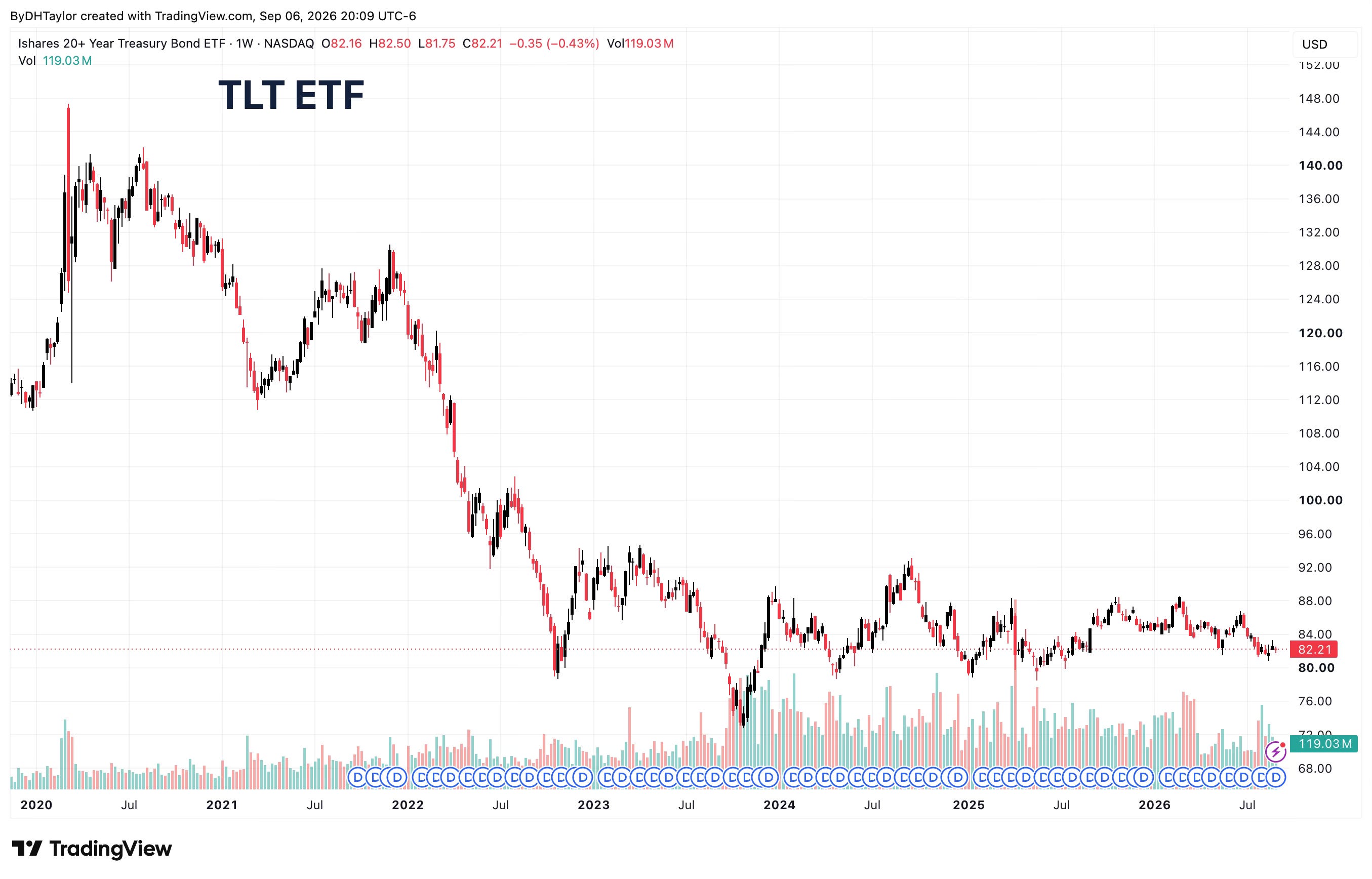
I have been short TLT ETF for some time, and if you look at this chart, in 2023, the market probed as low as $72.00. That was then, but now is a lot different. I believe TLT ETF can probe far below that, however this will be a very long process and I am not looking for a straight shot downward.
My short position on TLT has been a mix of short-dated, out-of-the-money vertical call spread short positions, and using those profits from those to buy long-dated vertical put spreads; I have built up a sizable position over many months. I will continue to build up this position as the rationale is there:
Higher inflation from the price of oil
Higher overall prices
Continuously increasing deficit
Japanese Bond yields on upward trajectory
AI debt spending
Given all of these, I feel that there will continue to be movements upwards in bond yields for a long time.

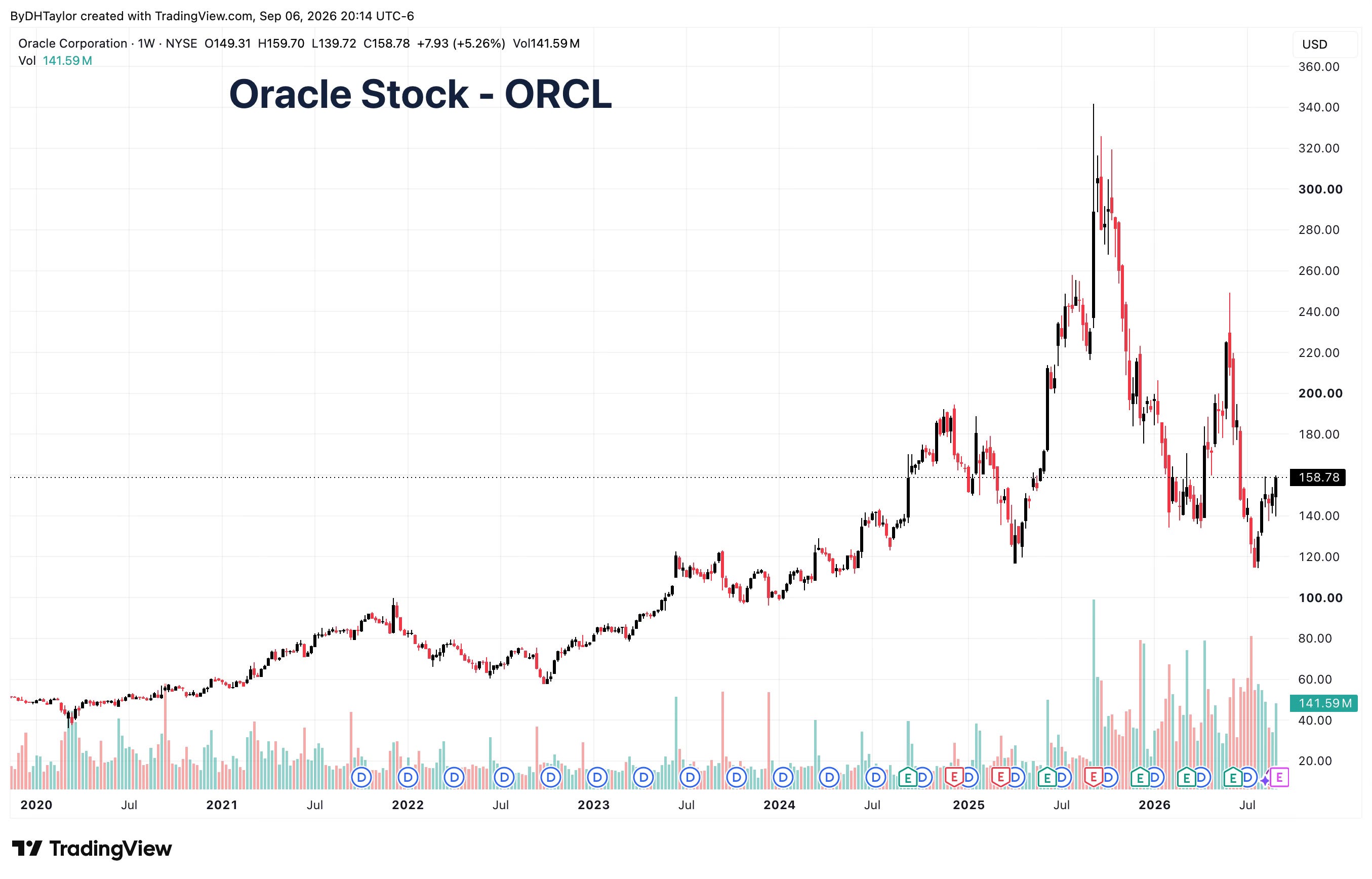
A lot of eyes will be peeled toward Thursday’s after hours release financial for Oracle. Oracle moved to raise capital in the form of both debt and equity to pay for its expansion into AI cloud servers. There are two important things to watch for in the earnings release:
OCI growth
RPO/backlog
Oracle Cloud Infrastructure (OCI) saw solid growth the past few quarters with $5.8B last quarter, up 93% year over year. Remaining Performance Obligations (RPO) are sitting at $638B. Basically, the RPO is what Oracle expects to earn over the following 5 years starting in FY 2027. Converting that RPO into actual revenue through OCI is what investors are going to scrutinize. The big catch is that Oracle simply does not have the compute power to convert that RPO into real revenue through OCI.
This is why Oracle is taking on more capital and debt to build out more compute power for their data centers. This is also why investors are beginning to get skittish on Oracle’s big bet.
On Thursday, Oracle will announce its earnings and the conference call afterwards is where investors will get explanations on the next moves. If Oracle can advance significantly in its buildouts and capture that revenue, this could be something to really drive the markets. If they cannot, ORCL stock may be in trouble.
What do I think?
AI is a white elephant that even if Oracle converts a measurable amount, all of the data centers are going to have to be re-upgraded over and over, again and again, and gaining an edge ahead of energy costs and upgrades to data centers is a long way off. I also believe Oracle will fall short this week and a few more times in the future.
