

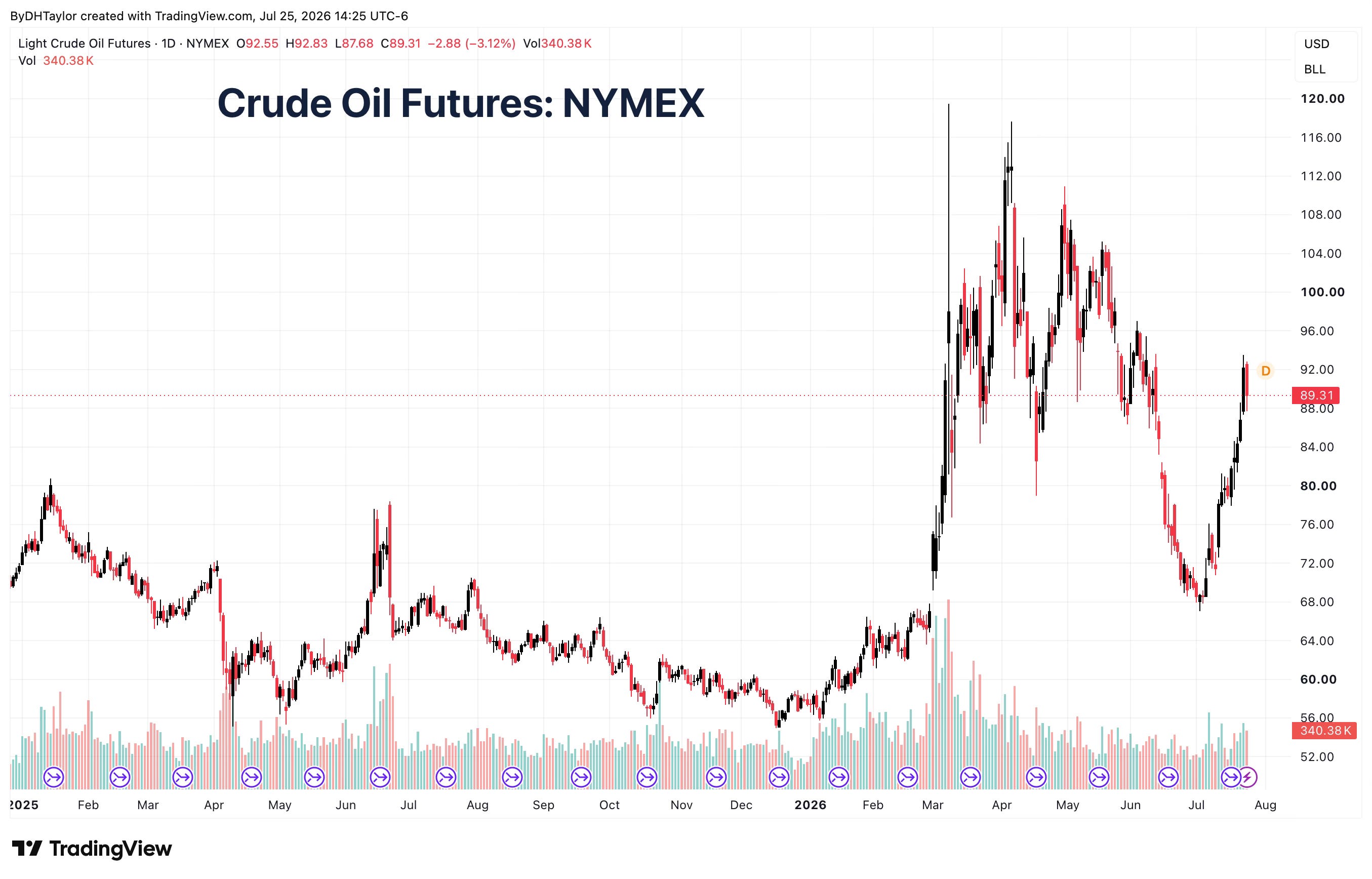
Here we go again: More fighting with Iran, and now the Houthis are firing on Saudi ships traveling through the Red Sea at Ra’s Bay al Mandab—using Iranian-provided missiles. Oil prices shot up, of course, and interest rates followed. This pulled the stock market lower:
Brent oil shot up to $100.00
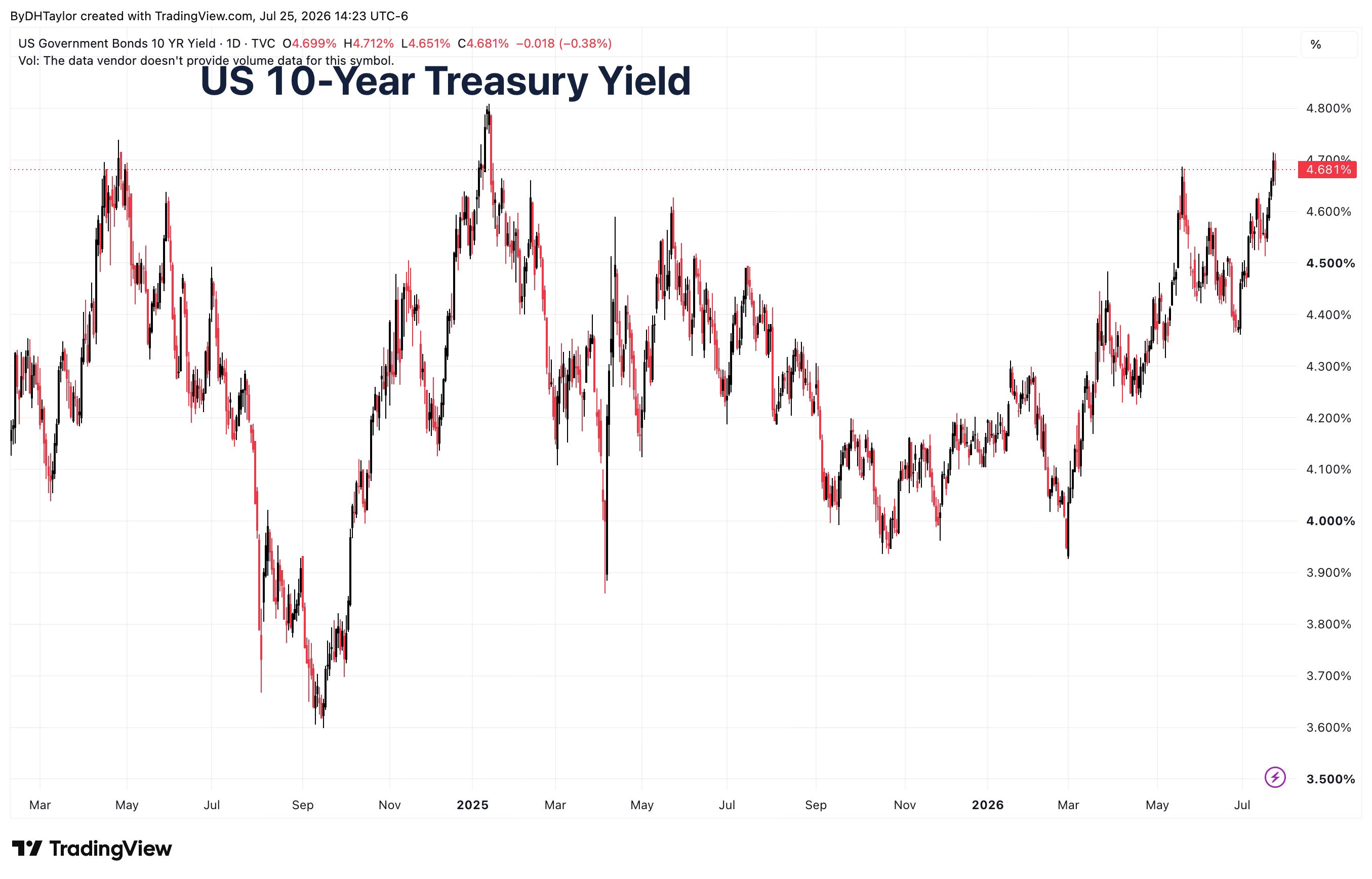
The US 10-Year Treasury yield crossed 4.70%
Major stock market indices sold 1.50% on Thursday
Is constant turmoil the new norm?

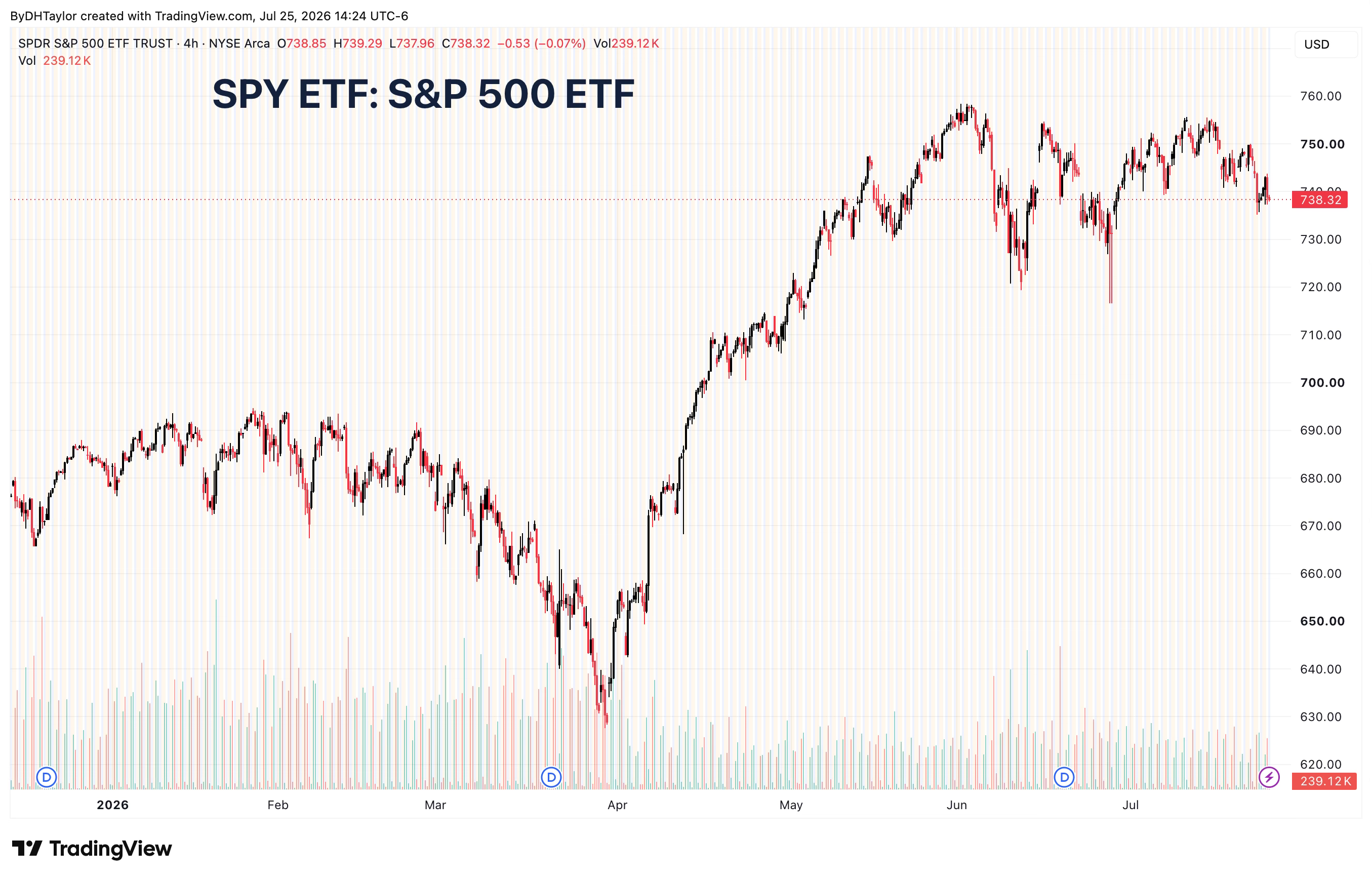
The stock market slid somewhat this week. Oil was a big piece of this, but there is more: Google parent, Alphabet, reported on Wednesday, and investors are increasingly skittish on the AI trade—more below.
The deal that was signed was nowhere near binding, and that has all but fallen apart as Iran and the United States have re-started missiles versus each other. This has almost a nil chance of working out for the United States, and because of this, oil prices are likely to remain lofty. Personally, I don’t think we see oil prices push above the previous high levels, but they are also not likely to fall back down to the $60 level for a while, either.
The next development is that the Iranians have armed the Houthis out of Yemen, and now they, too, are firing on Saudi Arabian shipping tankers moving through the Red Sea into the Indian Ocean. There is a back door to this, so while the strikes are new, they are not a permanent problem: Saudi Arabia can move oil through the Suez Canal. Unfortunately, that is a time-consuming, and costly solution. Any oil moving through the canal to Asia would now have to go around Africa adding to shipping costs and delivery times.
This, too, I believe is a temporary issue, and more likely than not, the United States will engage in targeting missiles being launched out of Yemen to ensure that Ra’s Bay al Mandab is opened to traffic.
In the meantime, US oil producers are likely to ramp up very quickly and take advantage of these lofty oil prices which would help alleviate supply concerns.

Higher oil prices will mean costs will be transferred to consumers, and that means more price increases. At a time when price pressures are already high from tariffs and the AI buildout, this adds even more to the drive higher in costs and lack of affordability.
I have been saying for a very long time that I felt interest rates would be heading higher, and they are. I believe that we will easily see the US 10-Year Treasury yield push above the 5.00% because of inflation.
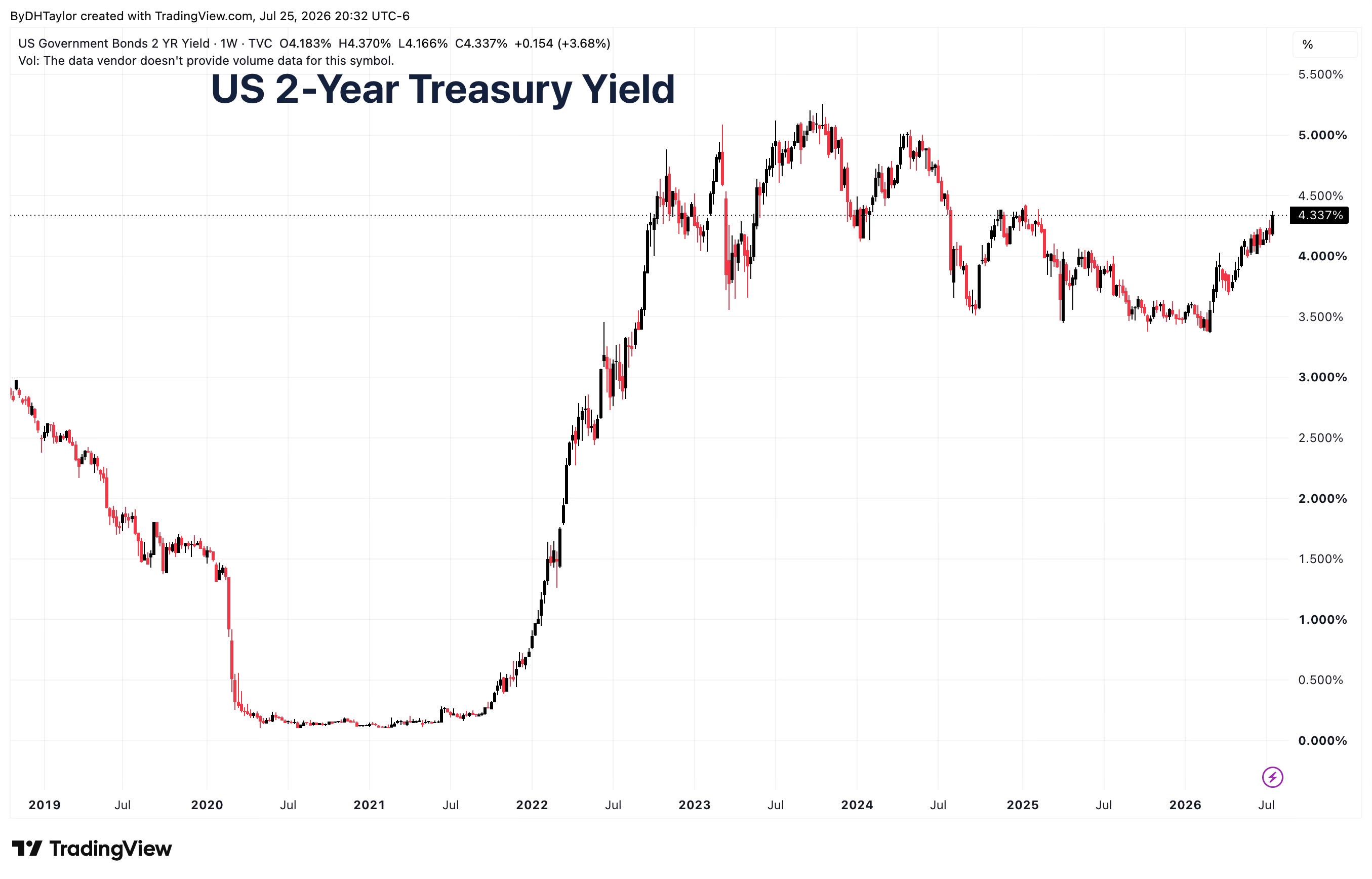
I have been watching the shorter-dated interest rates for moves. If the 2-year pushes back to 5.00% that will be jarring to the economy and the markets.

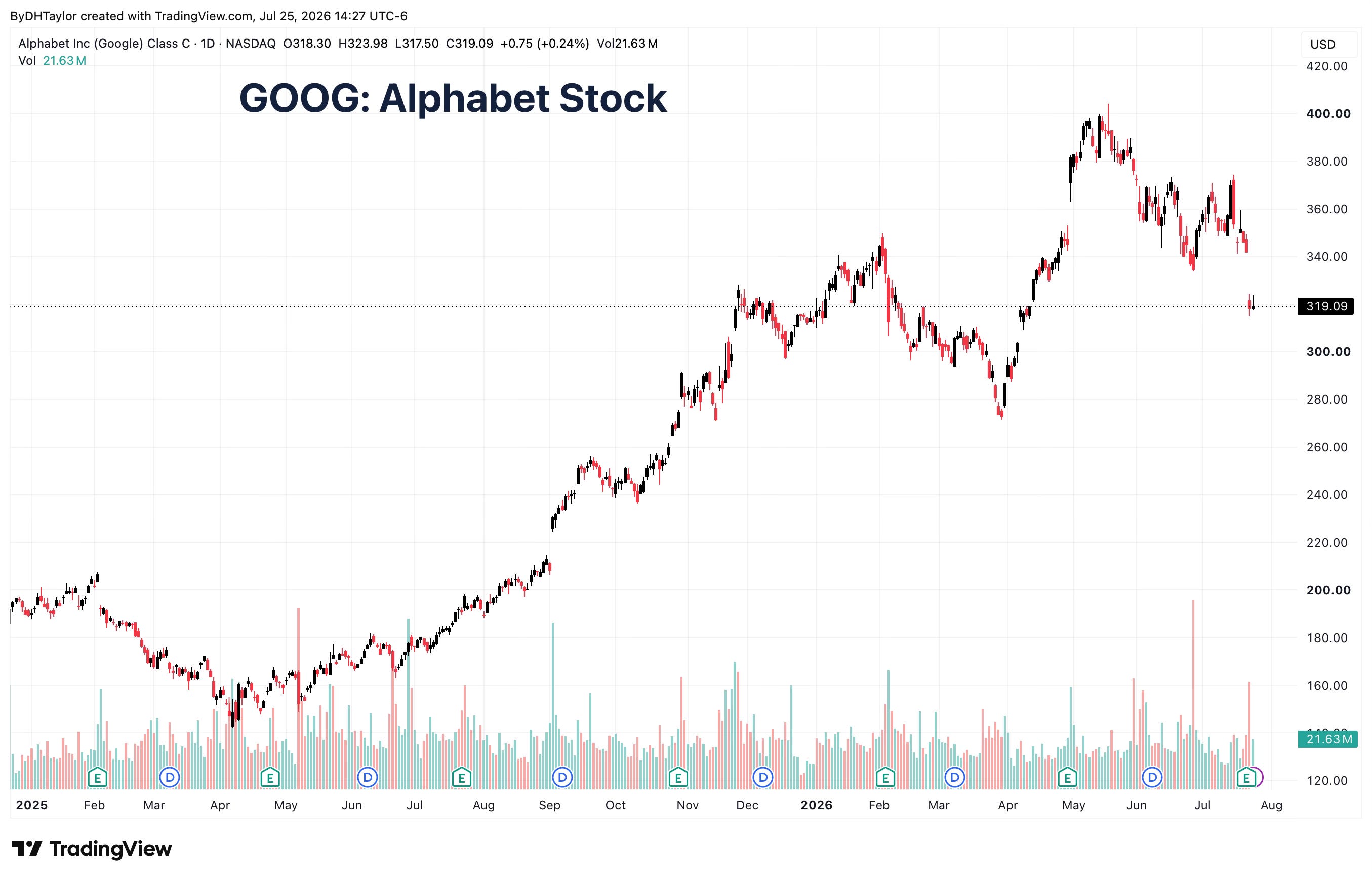
The AI trade got a reality check when Google parent Alphabet released its earnings for the quarter and announced they would be increasing their AI buildout for the year to $200B, up from a previously-announced level of about $150B.
The big standout for Alphabet was the negative cashflow from operations, the first since the company went public in 2004. Not only is the company not earning profits from operations, they are no longer buying back stock to boost shareholder value—they've reverted to issuing stock instead.
So Alphabet is not generating enough revenue to earn profits from operations, and the company is announcing a far bigger increase in investment. The stock market did not take that well—Investors sold GOOG down some 20% since the peak just in May.

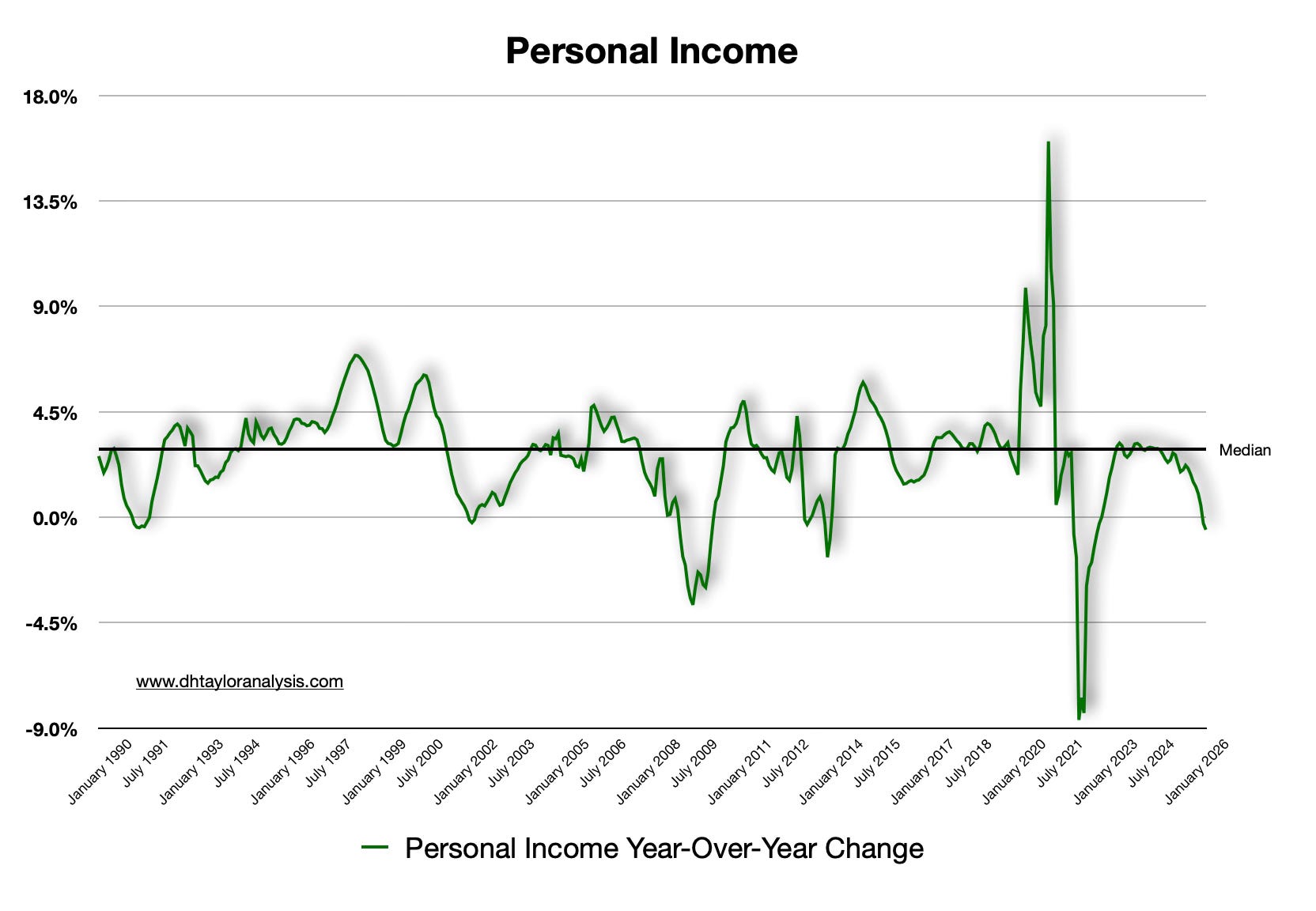
On the plate for this week is Personal Incomes and Personal Expenditures, along with the closely-watched PCE Price Index.
For me, and a great deal of my analysis, I scrutinize personal incomes and expenditures the most to see what shape the consumer is in. As you can see above, the consumer is now in negative territory with year-over-year growth in incomes. You can also see that previously when the number was in negative territory, it coincided with significant downturns in the economy.
This time is slightly different in that the economy is not necessarily turning downward as much as opportunities are being limited. The participation rate is declining. While those between the ages of 25-54 are seeing strong employment levels, the economy is losing out on those ages outside of these ranges such as those near retirement age.
This translates into lost opportunity for the economy without those contributing. That, in turn, could slow the overall economy as growth rates decline from lack of participation.
At the same time, anyone that is employed is seeing their finite incomes stretched to the limits with price increases absent of income growth. The tariffs and price pressures from the AI buildout are making it increasingly difficult for individuals to manage. Because of this, the economy is seeing higher credit card debt rates and lower savings rates.
Ultimately, I see the economy groaning slower and slower amidst prices moving higher and higher—nothing the administration is doing is turning the economy toward a positive direction, but instead, the opposite.
I remain short on my SPY ETF positions using vertical put spreads and selling vertical call spreads. These trades are working out, and I believe this is just the beginning of a far bigger move lower.
Meanwhile, I am also continually short TLT ETF largely taking the same kind of position with short vertical call spreads and going long vertical put spreads.
In the meantime, I am making more shorter-dated moves to take advantage of time decay.
