
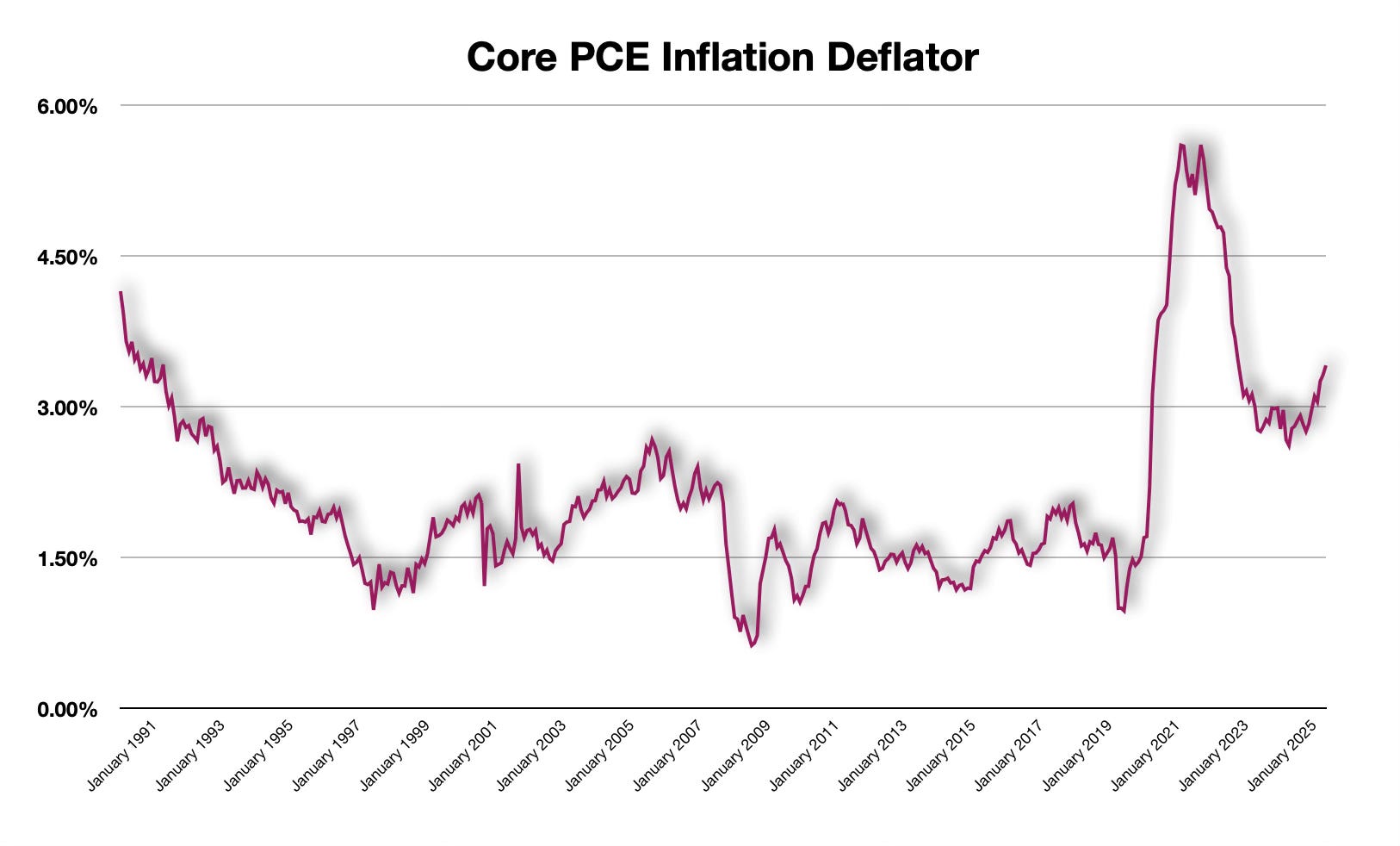
We are experiencing stagflation. Price pressures are increasing while simultaneously economic growth is declining. Although AI may be all the rage for investors, the “real” economy is in a strenuous disposition. To me, the math does not math on this, and at some point, there will be a break—it will likely come from the Federal Reserve taking necessary measures to deal with price increases.
The chart above is the Core PCE Price Index, and as can be seen, it is heading straight back upwards—Core PCE printed about 3.40% on a year-over-year growth rate last week.
Remember, the target rate is 2.00%, and after the latest run-up from the COVID lockdowns and price spike for oil from the Russian invasion of Ukraine, the Federal Reserve was forced to take significant measures to stem rapid price increases. While the growth rate inflation moved back down on a year-over-year basis, it never achieved a long-lasting level at the 2.00% target—it never even got there.
First thing on inflation is that this is not coming from oil prices, but instead AI buildouts and tariffs. Demands from AI data center buildouts is pushing up commodity prices, which that has been trickling through tot he broader economy.
Then there are the tariffs, which is a purely American experience simply because we were the only country to impose financial sanctions on ourselves. These measures, too, have broadly contributed to price pressures, and those affects continue to show up in the price increases we are seeing—Mostly, oil prices will not have measurably large input on price increases.
All the while, economic growth is moderating, but the engine for that is turning negative with consumer income growth dropping into the red. This tells me that there will be significant downside potential with both cyclical stocks as well as potentially defensive stocks.
Income & Expenditures
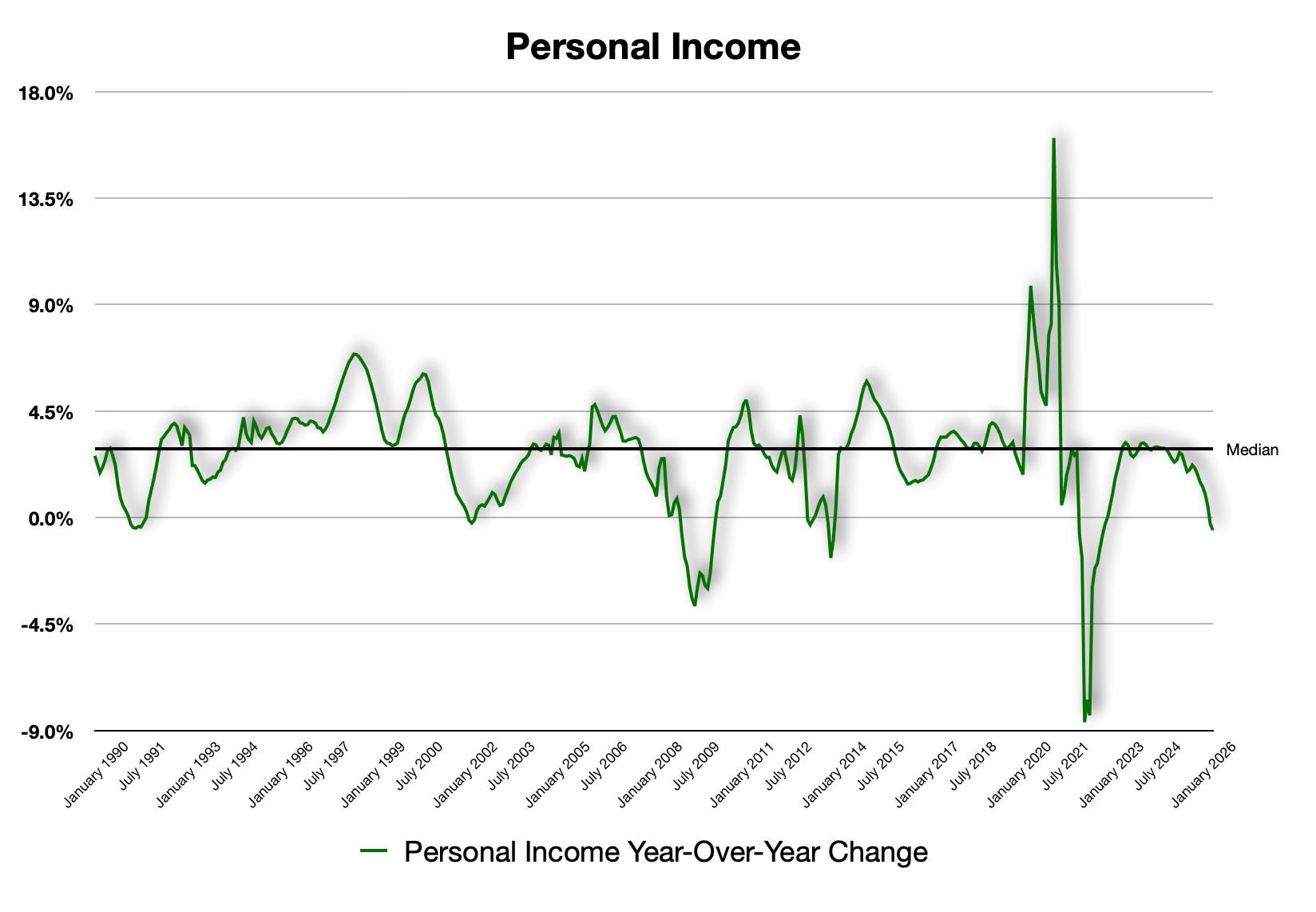
Above is the year-over-year growth rate of incomes. There is a decline in overall incomes, which is likely coming from a decline in the Civilian Labor Force and Employed Civilians—you can have a decline but maintain a flat unemployment rate because of the math. There may be other contributors to a declining personal income growth rate such as lower self-employment earnings.
Nonetheless, this decline will trickle through to decreasing expenditures, which this will eventually turn into declining revenues for companies.
Personal Expenditures
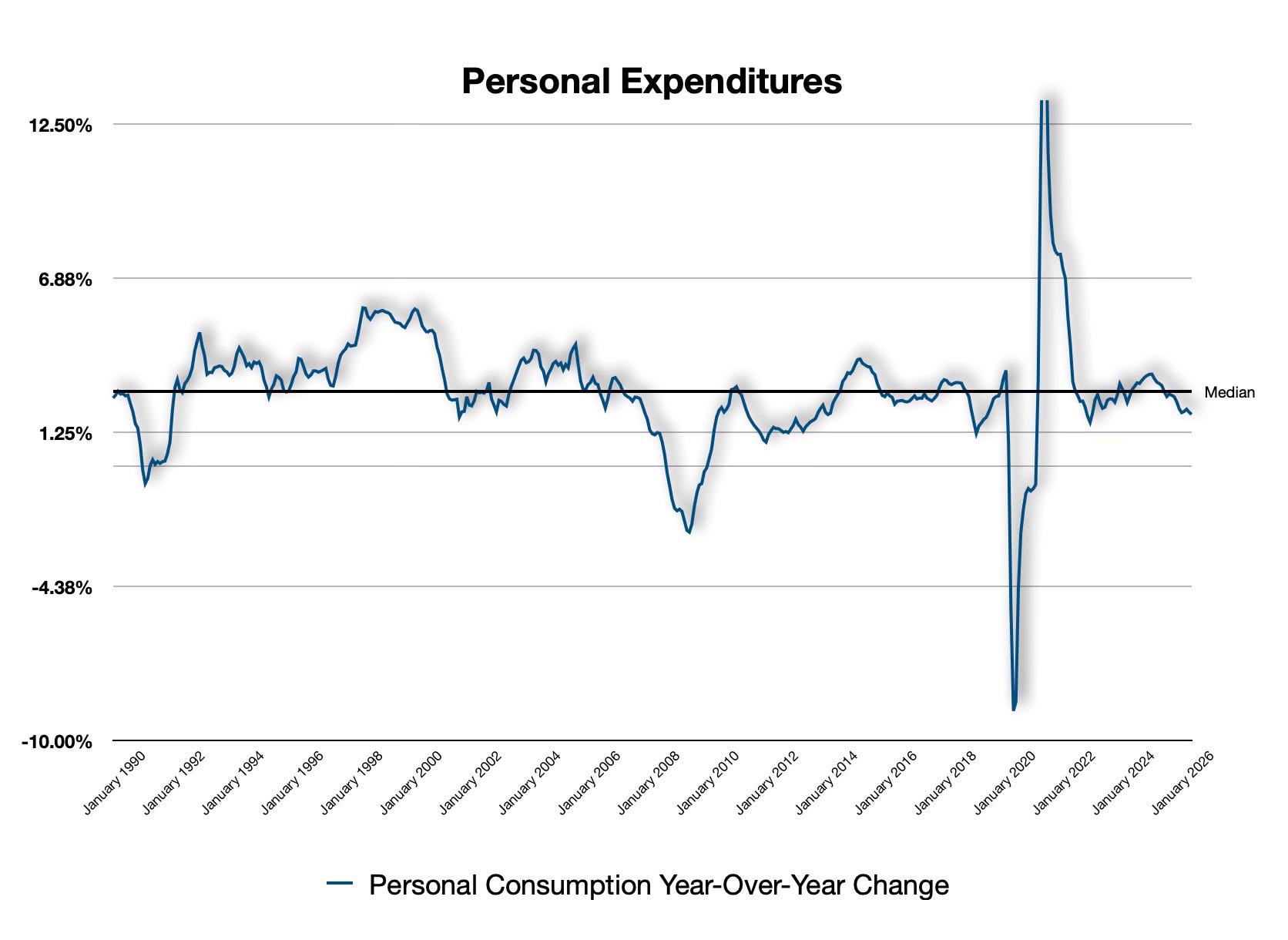
Expenditures are turning lower, but at a slow pace. I can foresee continued declines here. This will not help out the stock market, and if the Federal Reserve turns interest rates upward, increasing declines would be next.
Sentiment & Expenditures
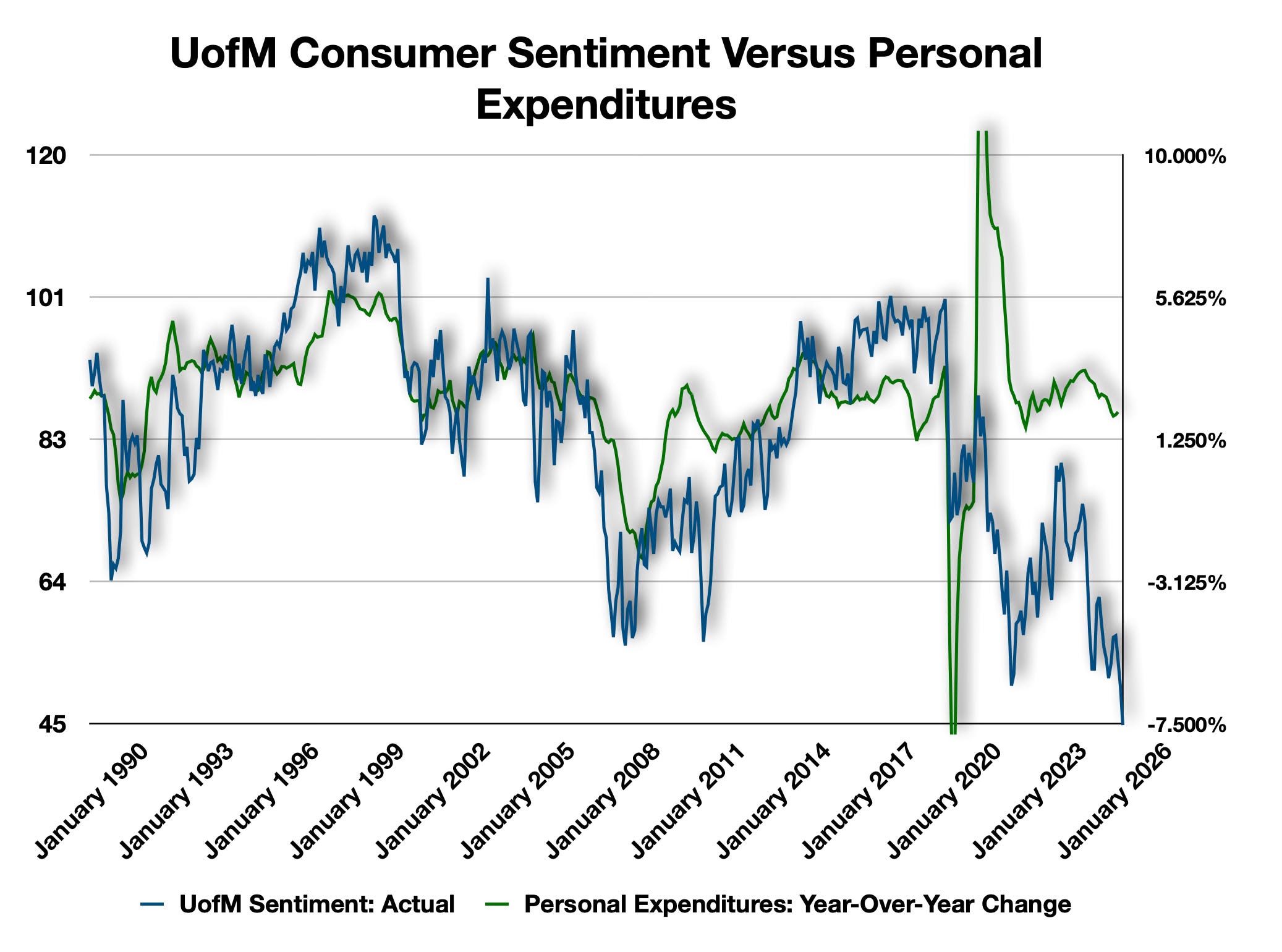
Consumer sentiment has improved on the final reading of the University of Michigan Consumer Sentiment Index from the all-time low of 44.5 to 49.5, which is far from a consolation.
Mostly, sentiment and expenditures move in tandem. The fact that the conflict with Iran appears to mostly be over is cause for future hope for consumers. I believe this number will be low for some time, and it may be years before we see numbers in positive areas.
The caveat to that would be inflation and interest rate increases, which that is very likely occurring as we speak.

Savings v Credit Card Debt
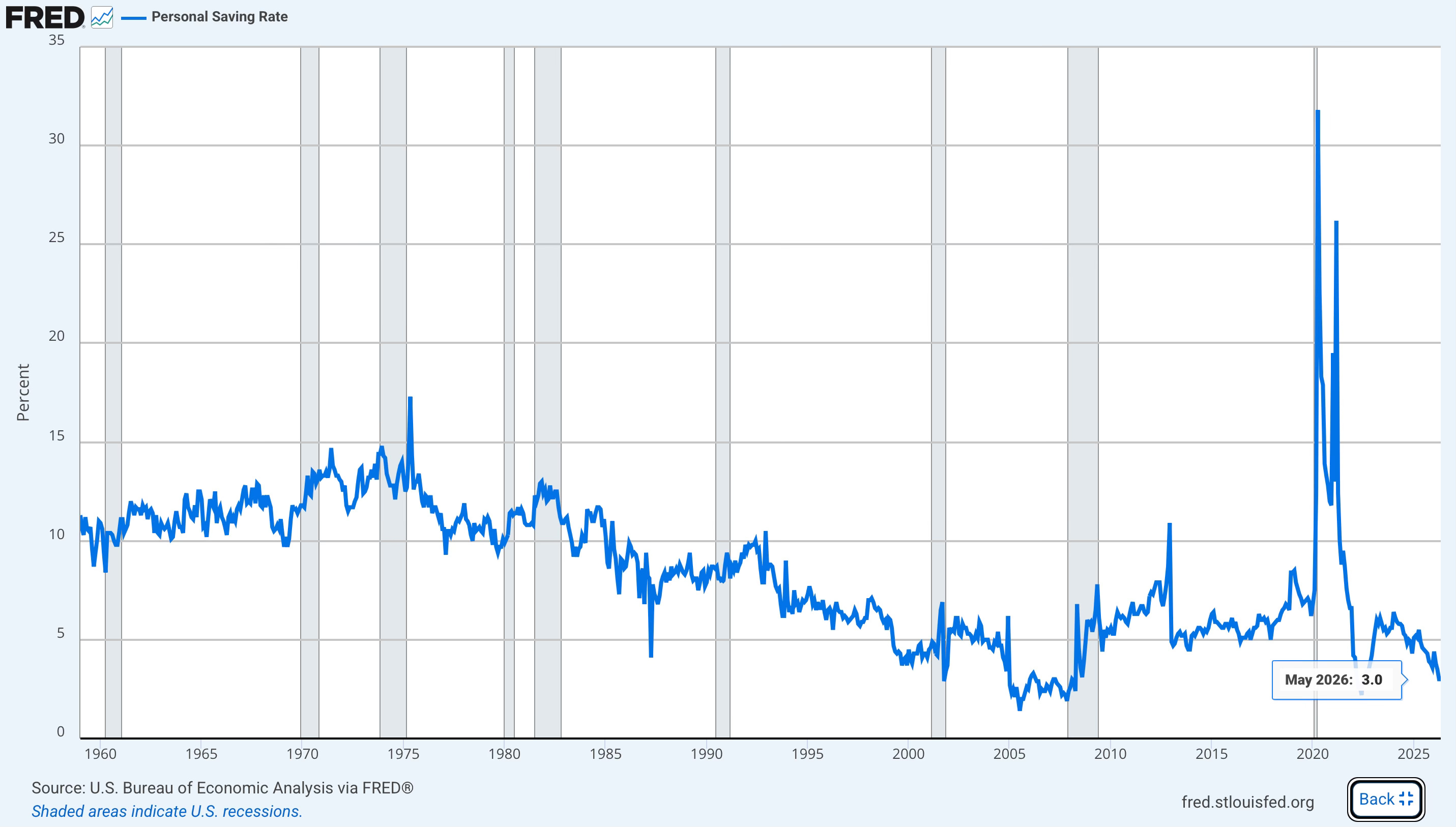
How are consumers financing the current levels of expenditures? I’ve talked about this previously as the savings rate shows that consumers are dipping into savings more and more, which the chart above shows the trend moving downward.
Credit card debt is higher, of course, but not necessarily at dangerous levels.
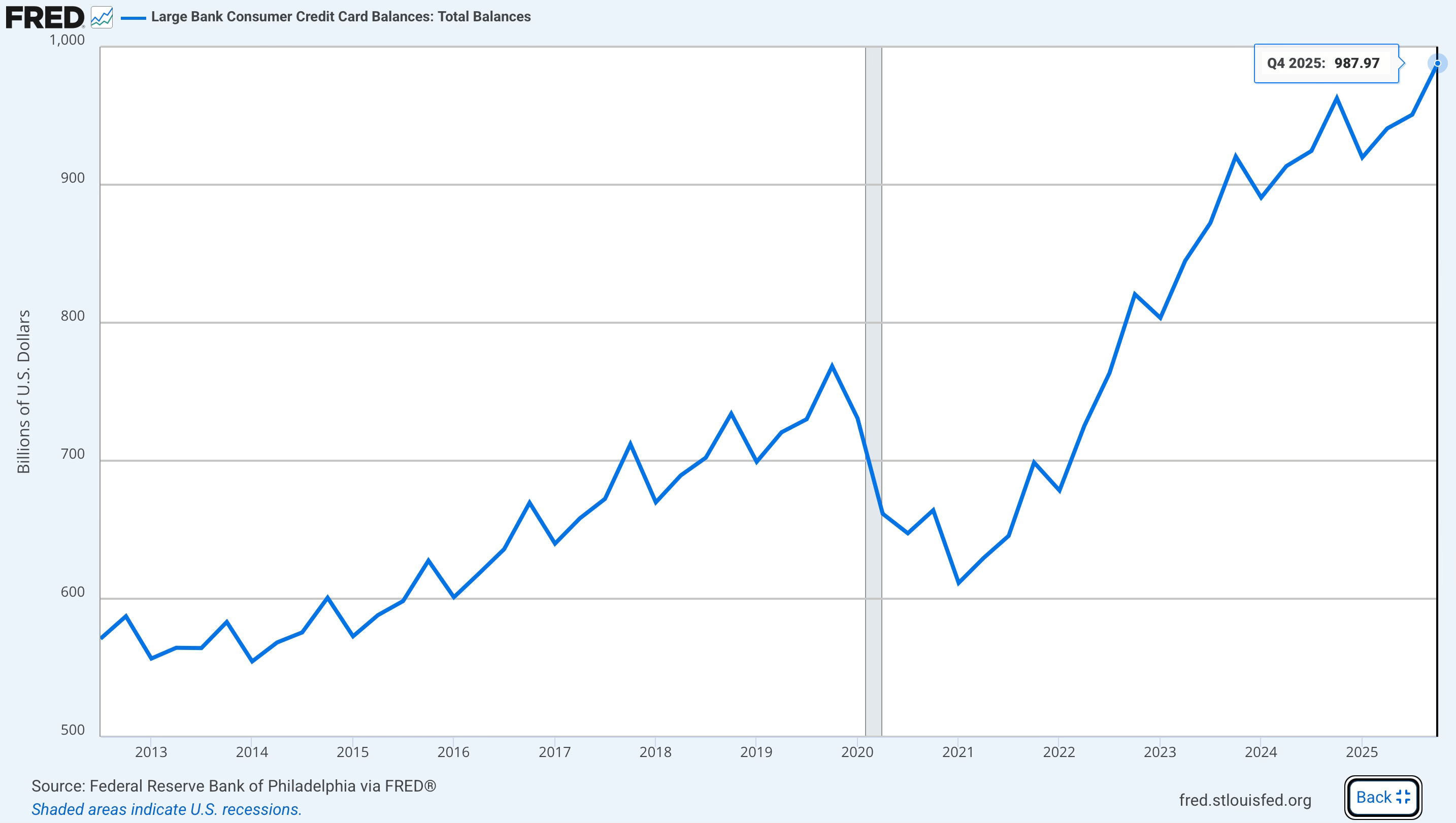
While a lot have made a lot over the consumer credit card balances being elevated, what is missing is a default rate that is dangerously high. Default levels are not at levels we’ve seen in past recessions,
What happens, however, once the Federal Reserve increases interest rates? This is the ongoing theme I am preparing for that as we see a dwindling in personal incomes, and this is accompanied by higher interest rates, expenditures will shift lower. Incomes are finite, which this dictates that consumers will prioritize expenditures.
Markets
The stock market will continue to be abuzz with AI. My position is that there will be both winners and losers in the AI arms race, but the market is yet to appreciate this.
In the meantime, the buildout of AI is having effects on the economy such as price increases for base commodity prices, energy, and other areas. Some players will profit, but mostly I believe that the refresh treadmill for data centers will merit a rethink on valuations for AI stocks.
For now, interest rates will move higher, and the stock market will likely have a rethink on valuations given broader economic metrics.
Interest Rates
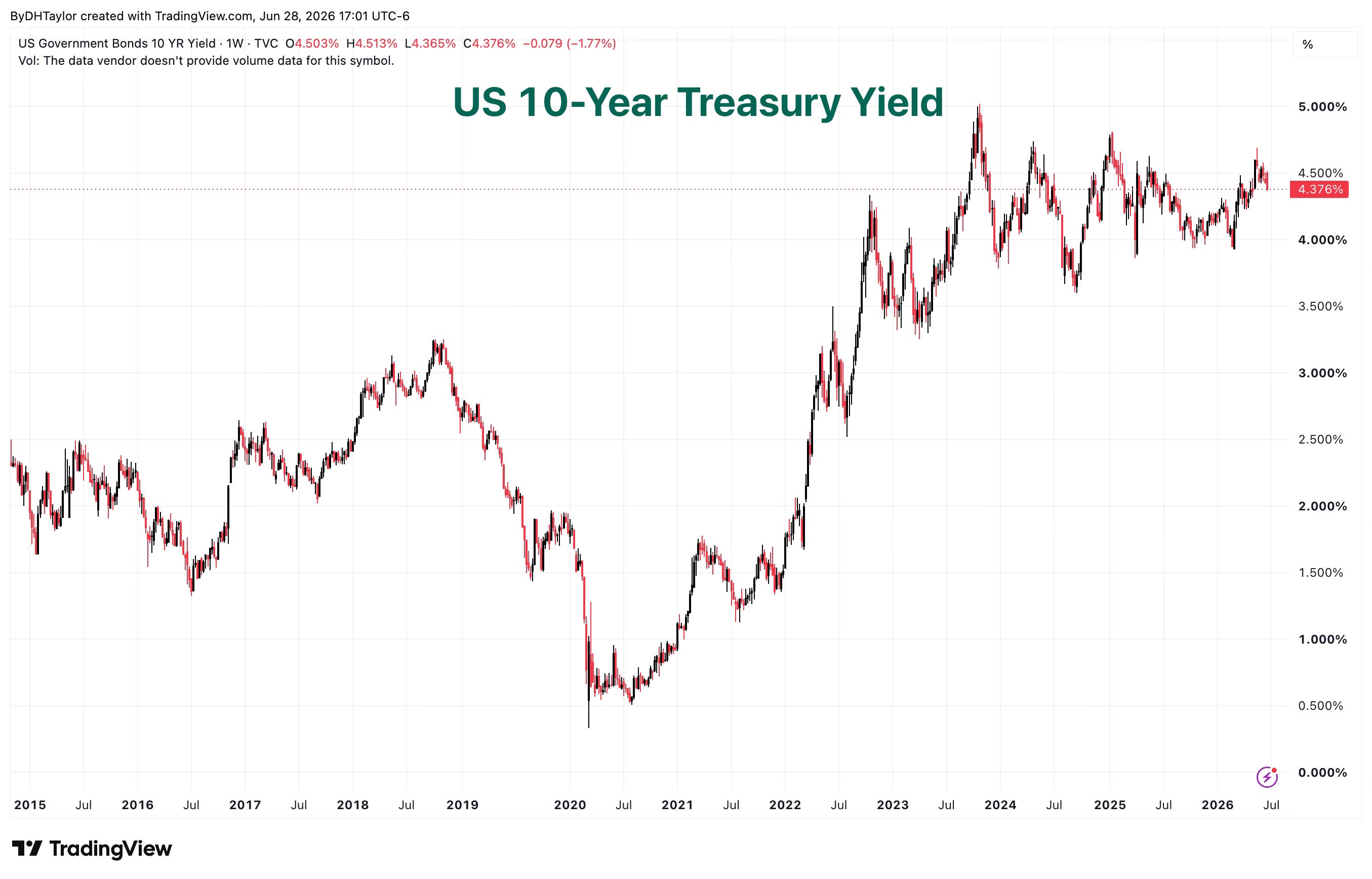
Although the Federal Reserve lowered interest rates starting in September 2024, I never felt the economy was there. I stated emphatically that price pressures would head right back up, and they are doing that now. The only way to fix this is with higher interest rates, and perhaps shrinking the money supply, which this new Fed Chairman is very likely to push for.
That would mean the broader economy will slow, which will translate to lower revenues for companies not associated with AI.
Stock Market
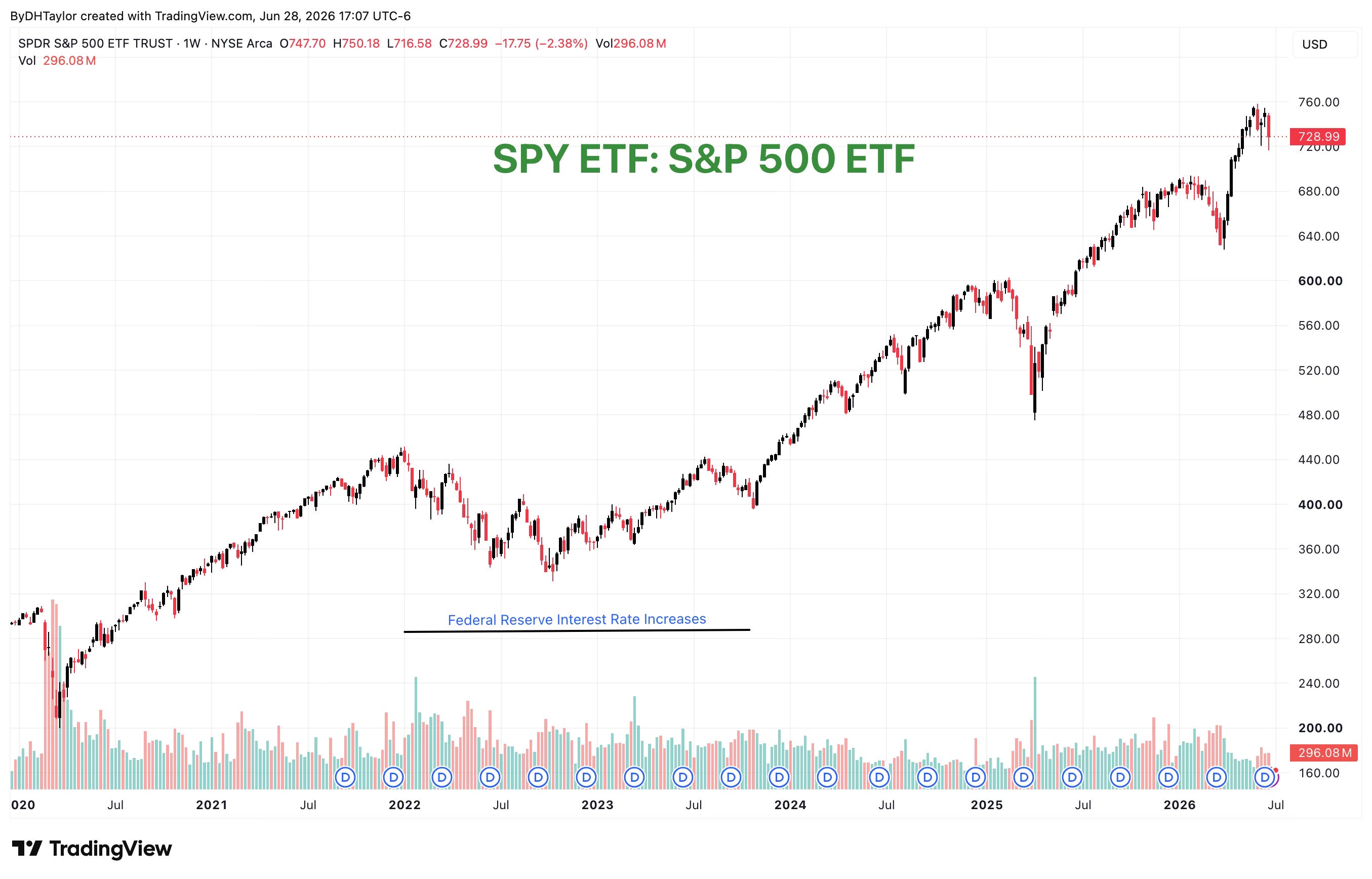
I think we are a few economic and news prints away from a reality with the stock market. I continue to look at the AI buildout and see that some early adaptors will do well, and those with other core businesses, such as Google and search, will allow for a longer payout period, but I think the overall market is well ahead of itself.
If we continue to see higher inflation prints, and if the next employment numbers begin to paint a diminishing picture, the stock market will likely react to this kind of landscape. Basically: I’m not buying these valuations, and I have been playing for a recalculation in expectations for a few weeks now.
My Positions
I continue to hold to core positions with both SPY ETF and TLT ETF, both of which are basically the same combined outlook.
First, interest rates are going higher in order to combat price increases. Whereas the market was positioned for interest rate decreases this year, that is off the table as the market is now positioning for interest rate increases instead. I look for a range of 4.75% - 5.00% on the US 10, and that should push TLT below the $80.00 level, and that is about where I will take profits on my positions.
Next is SPY ETF where I expect a recalculation on valuations. I believe that some companies will do well with AI, but not all, and the refresh rate on AI data centers, specifically the servers and boards, are going to be an expensive and continual expense that will make for continuous re-investments.
With interest rates moving higher, and with a rethink on AI valuations, I see SPY ETF moving lower before the end of this year, and I have been positioning myself for that move lower—think sub 700 and all the way down to potentially 650.